All posts by: Sarah Hansen, M.S. '15


UMBC faculty comment in media on President Trump’s first week in office

Following President Trump’s inauguration on January 20, several UMBC faculty weighed in on his first week in office and provided commentary and reaction to a range of domestic and foreign policy issues.

Kate_Drabinski-2907Kate Drabinski, lecturer of gender and women’s studies, attended the Women’s March on January 21 and joined WEAA’s The Marc Steiner Show to discuss how she thought the event could be a starting point for inspiring people who haven’t been involved in the political process before to have their voices heard.

“Solidarity is a practice, not a moment,” she said. “I think what it is for me is an opening, an opening for people who haven’t been involved in politics …I’m really excited about welcoming them in.”

Drabinski also talked about how the Women’s March highlighted the power of local organizing, reflected in different regions across the country.

“We all don’t want the same things. We will never all be on the same page…that is a truth about politics. It is really messy. I hope that we can stay flexible for people to organize…and I’m hoping that the organizing on the local level continues.”

Kimberly Moffitt in her officeKimberly Moffitt, associate professor of American studies, was a guest on The Baltimore Sun’s “Roughly Speaking” podcast with Dan Rodricks to discuss President Trump’s inauguration speech.

Moffitt was joined on the podcast by Richard Cross, Maryland Republican analyst and speech writer, and they also discussed a range of other topics including President Trump’s cabinet selections and potential future policies.
John-Rennie-Short-emailJohn Rennie Short, a professor of public policy, was a guest on Radio Sputnik to share his thoughts on how the new administration has vowed to prevent China from taking over territories in international waters in the South China Sea. He argued that it is difficult to predict how President Trump will react because there is no political record to look back on.

“I think for a new president with no government experience, there is a strong sense of making a statement, drawing a line touting their position very early on. And since China is a major power in the world, it is obviously important for the Trump administration to respond to China in the South China Sea,” Short said.

Complete radio segments can be found below:

National news roundtable: Trump’s Inauguration and Saturday’s Women’s March (The Marc Steiner Show) 
Roughly Speaking podcast: Trump refries a stump for his inaugural address (The Baltimore Sun)
‘South China Sea dispute can figure into broader bilateral talks and access to markets’ (Radio Sputnik) 

Image: The White House. Photo by Angela N., CC by 2.0.

Honors College professor promotes cross-cultural understanding in India

As part of a UMBC Dean’s Travel Grant, Honors College Professor Ellen Handler Spitz recently traveled to India where she presented a plenary address at an international conference and taught two lengthy seminars to 25 masters-level English literature students on “The Adventures of Huckleberry Finn.” The experience promoted cross-cultural understanding and the significance of language and history in understanding many contemporary issues.

During the trip, Spitz presented a plenary address at a conference focused on the implications of studying English literature in non-English speaking environments in an era of globalization. The event was covered by The New Indian Express.

Professor Spitz also traveled to Utkal University in Bhubaneswar, Odisha, India, where she was invited to teach English language graduate students about Mark Twain’s 1885 book, “The Adventures of Huckleberry Finn,” and to grapple with how she feels the work continues to reflect much of the division that is seen in contemporary society.

Ellen Handler Spitz is introduced to the class at Utkal University by the department chair, Professor Himansu Mohapatra.

“The struggle in Huck’s heart and mind reflects the deep, tragically ongoing American rift between our country’s dedication to ‘liberty and justice for all’ on the one hand and a recidivist, seemingly ineradicable racial prejudice on the other,” Spitz said.

The seminars centered around discussions of language, history, and the symbolism of the Mississippi River in Twain’s book. The Utkal graduate students engaged with Spitz in a discussion about the themes in the novel and through converting the classroom into an imaginary raft to help the students experience the power of the novel, Spitz explained that it “proved truly effective, and we managed to erase all boundaries between us of color, age, gender, and nationality.”

Spitz is the author of six books on the arts and psychology. She teaches interdisciplinary seminars in aesthetics, literature, psychology, and the visual arts. Read more on the Honors College website.

Header image: Ellen Handler Spitz presents a paper at an international conference on the implications of studying English literature in an era of globalization. Photos courtesy of Pulastya Jani, Lecturer in English, Department of English, Utkal University. 

AAMC highlights UMBC’s national model to support minority student success in med school

The American Association of Medical Colleges (AAMC) has published a new article by UMBC President Freeman Hrabowski and Peter Henderson, senior advisor to the president, emphasizing the need for more scientists from underrepresented minority groups in research and health careers. The piece also details how UMBC’s Meyerhoff Scholars Program serves as a gold-standard model in addressing this national need.

Recent AAMC data reveal that UMBC is the #1 producer of African American undergraduates who go on to enroll in M.D./Ph.D. programs, and the Meyerhoff Scholars Program is a major factor in that achievement. Meyerhoff alumni are more than five times as likely to graduate from or be enrolled in a STEM Ph.D. or M.D./Ph.D. program as students who were accepted to the program but chose not to attend, say Pres. Hrabowski and Henderson.

“Our program is successful in part because of its core principle,” they suggest. “The university is responsible for supporting student success, not weeding students out.”

The Meyerhoff Scholars Program emphasizes mentorship, student research, and a sense of community, while also providing financial support. “These components help students develop a vision of themselves based on high expectations,” the authors explain.

The program invites applicants from all underrepresented groups in STEM, including low-income and first-generation college students. Among over 1,000 Meyerhoff alumni are more than 230 who have already completed Ph.D.s.

Program alumni include people like Kafui Dzirasa ’01, chemical engineering, now an assistant professor at Duke University and recipient of the Presidential Early Career Award for Scientists and Engineers from President Obama. Dzirasa will return to UMBC February 20 to kick off Engineers Week, along with his brother Delali Dzirasa ’04, computer engineering, a Meyerhoff alumnus whose cybersecurity company, housed in the bwtech@UMBC Research and Technology Park, was named 2016 Design/Development Firm of the Year at Baltimore Innovation Week.

The Meyerhoff Scholars Program has also increasingly had an impact beyond the students it touches directly. A 2011 report by the National Academies of Sciences, Engineering, and Medicine found that two-thirds of all students left a STEM major within the first two years, even if they were high achievers previously. With this knowledge in mind, UMBC has created a range of new student programs that offer supports found to be successful in the Meyerhoff Scholars Program to students across populations and disciplines, from the Center for Women in Technology Scholars to UMBC’s intensive, research-driven version of the national MARC U*STAR Scholars program.

Recently, STEM BUILD launched at UMBC with an $18 million grant from the NIH. The initiative’s motto? “Think 500, not 50.” Beyond being a program that offers student support, BUILD is a research study working to create a model for universities to provide comprehensive support on a large scale without requiring a high level of additional resources.

The Meyerhoff Scholars Program has also served as a model to other institutions. Penn State and the University of North Carolina–Chapel Hill have been working since 2014 to adapt the program to their universities, through support from the Howard Hughes Medical Institute.

Michael Summers, Robert E. Meyerhoff Chair for Excellence in Research and Mentoring and University Distinguished Professor of chemistry and biochemistry at UMBC, has played a major role in this expansion of the vision for the scholars program, and he’s driven by the massive societal impacts he believes it can achieve.

“Significant racial/ethnic health disparities persist,” Summers says, “and African American research scientists are the ones most likely to tackle diseases that disproportionately affect the black community.”

“The ultimate goal,” write Pres. Hrabowski and Henderson, in their AAMC article, “is to help these students eventually improve the health of African American and other minority communities, as well as the nation as a whole.”

Read “How undergraduate programs can boost minority success in medical school.”

Image: President Hrabowski talks with a UMBC student in the Retriever Learning Center; photo Marlayna Demond ’11 for UMBC.

UMBC celebrates launch of Hill-Lopes Scholars Program focused on supporting women in STEM

Barbara Hill and Ancelmo Lopes were drawn to UMBC by the university’s commitment to providing holistic support for students from all backgrounds. On January 13, 2017, UMBC celebrated the launch of the new Hill-Lopes Scholars Program to support high-potential women in specific STEM majors where women remain underrepresented, with a reception for the first cohort of students, their families, and their faculty mentors.

Hill-Lopes-scholars17-5560

The new scholars program, made possible through a generous gift from Hill and Lopes, draws inspiration from the Meyerhoff Scholars Program, nationally-lauded as the “gold-standard” for supporting underrepresented minority students in STEM. To support students’ persistence and success, the Hill-Lopes Scholars Program provides financial assistance and connects participating scholars with faculty mentors and campus services that can propel them toward their degrees.

Hill-Lopes-scholars17-5739

The six UMBC students selected as the first class of Hill-Lopes Scholars have a broad range of intellectual interests, but all have their eye on advanced degrees and careers in highly competitive STEM fields.

Heather Frank ’17, biochemistry and molecular biology, conducts research in the lab of University Distinguished Professor Michael Summers and just published a first-author paper in the prestigious journal Proceedings of the National Academy of Sciences.

Karla Negrete ’19, mechanical engineering, began her work in research as a high school student and has focused on finding and creating opportunities to progress toward a career in bioengineering. Her next step will be an internship with BGE this summer.

Jada Damond ’19, environmental engineering, will soon travel to Nicaragua to work on a water quality project. She is also particularly interested in alternative energy sources.

Hill-Lopes-scholars17-5714

Johanna Tsang ‘18, mechanical engineering, will intern at Northrop Grumman this summer in the Calibration and Quality Engineering division.

Blair Landon ’19, chemical engineering, plans to pursue graduate school in biochemical or biomedical engineering and, at UMBC, she is already a learning assistant for general chemistry.

Hill-Lopes-scholars17-5461

Stormy Hill ’17, statistics, plans to pursue a career as an actuary with a focus on large-scale risk analysis. “This program is exceptional because it goes above and beyond to help its scholars,” Hill says, “beyond college, into our internships and careers.”

Faculty mentors Jennie Leach, chemical engineering; Anne Spence, mechanical engineering; Elsa Garcin, chemistry and biochemistry; and Anindya Roy, mathematics and statistics, will play a key role in the program.

“Being smart is not enough” to achieve success, UMBC President Freeman Hrabowski reflected. “There needs to be someone to say, ‘Give this person a chance.’” He described how faculty in the program will not only mentor the students, but also advocate for them.

Stormy Hill '17 meets Barbara Hill and Ancelmo Lopes. Photo Marlayna Demond '11.

In describing the power of mentorship, Pres. Hrabowski cited the success of UMBC’s ADVANCE program, which works to increase the number of women faculty at UMBC, particularly in STEM areas. Since that program’s inception in 2003, the number of female tenure-track faculty at UMBC has increased 73.3% – a boost in representation beneficial for UMBC’s new Hill-Lopes Scholars.

Speaking directly to the scholars at the inaugural reception, Pres. Hrabowski encouraged them to learn from their mentors by listening to their personal stories, “and then, imagine how, in time, you can help other people.”

Hill-Lopes-scholars17-5643

His focus on support, mentorship, advocacy, and role models echoed how Hill and Lopes described their own sense of the UMBC community. Lopes commented, “This place has a reputation for helping students be the best they can be.”

“We’re very proud to be part of the UMBC community,” shared Hill. “We couldn’t think of a better home for this program.”

Banner image: The inaugural Hill-Lopes Scholars with Barbara Hill (far right) and Ancelmo Lopes (far left). Students from left to right: Stormy Hill ’17, Heather Frank ’17, Karla Negrete ’19, Jada Damond ’19, Blair Landon ’19. All photos by Marlayna Demond ’11 for UMBC.

Kimberly Moffitt joins WEAA to comment on the role of the news media in covering President Trump

In the days leading up to the presidential inauguration, Kimberly Moffitt, an associate professor of American studies, joined WEAA’s The Marc Steiner Show for a discussion about the news media and its coverage of President Trump.

A focal point of the discussion was the media coverage of Rep. John Lewis’s decision to not attend the inauguration and when he said he thought Pres. Trump was not elected legitimately, followed by Pres. Trump’s response to that.

Moffitt, whose research interests include media studies/criticism, argued that covering the situation presented a complex challenge for many journalists.

“Sometimes I think journalists do live in the bubble of ‘I am objective,’ and I’ve struggled with even recognizing that as a term synonymous with anything that human beings are participating in. And so I so appreciate [E.R. Shipp’s] willingness to say, ‘you know, this was tough for us as journalists who have a task before us to report the news and give information to the public to be able to respond or react to,’” Moffitt said. “I think it’s so important, because it does show our complexity as human beings and our willingness, or the inability sometimes, to do exactly what that particular estate is supposed to do for our nation.”

In a separate segment earlier this month on The Marc Steiner Show, Moffitt commented on the intersections of social media, young people, violence, and empathy in response to the filmed attack of a young disabled man by four youth in Chicago.

She argued that social media has added an element to childhood in ways that were not visible in past generations.

“It has created this instantaneous celebrity culture that everyone wants to be a part of,” she said. “And by virtue of that, what we tend to do is take certain actions that we then believe will make us go viral in some way, which then means we aren’t even thinking about what might be some of the consequences or repercussions of those actions.”

Dr. Moffitt was also a guest on The Baltimore Sun’s “Roughly Speaking” podcast to analyze President Trump’s inaugural address.

Listen to all of the segments below:

Chicago Assault: Violence, Empathy, and Social Media (January 9)
Media Roundtable: Preparing for a New Era (January 17)
Roughly Speaking podcast: Trump refries a stump for his inaugural address (January 20) 

Image: Kimberly Moffitt speaks during a Humanities Forum event at UMBC. Photo by Marlayna Demond ’11 for UMBC. 

Whitney Schwab wins NEH grant to trace origins of the philosophical study of knowledge

The National Endowment for the Humanities (NEH) recently announced funding for highly competitive grants in 43 states around the country to support a range of humanities-based research and programs.

Whitney_SchwabWhitney Schwab, assistant professor of philosophy, won a prestigious fellowship to research the origins of philosophical study of knowledge in the Western tradition. His project will involve writing a book manuscript to examine his central argument that thinkers didn’t start focusing on the concept of knowledge until the Stoics, succeeding Plato and Aristotle.

“The Stoics attempt to determine the conditions that must be met for someone to have a well-formed belief, and the state they claim one is in when he or she has a well-formed belief is katalêpsis,” explained Schwab. “In examining what threshold a belief has to cross to count as katalêpsis, the Stoics are engaging in a project much more similar to modern day attempts to characterize knowledge than anything we find prior to the Stoics.”

Schwab’s grant is funded for one year beginning in August. His ultimate goal is to produce a book, as well as, likely, articles that result from the research.

“It is certainly very flattering to receive this award early in my career,” explains Schwab. “It is also very encouraging. Over the course of completing a long-term project, a lot of doubt can creep in about the value of the work. So, the fellowship provides a lot of motivation to keep working.”

Schwab’s fellowship is part of $16.3 million in funding for humanities research ranging from a preservation grant for Xavier University of Louisiana to protect its special collections which include one of the few remaining original copies of the first anthology of African-American poetry published in the United States to the study of Kurdish nationalism by Southern Methodist University.

“The humanities help us study our past, understand our present, and prepare for our future,” said NEH Chair William D. Adams in a news release announcing the awards. “The National Endowment for the Humanities is proud to support projects that will benefit all Americans and remind us of our shared human experience.”

Schwab’s research focuses on ancient philosophy with specific interests in epistemology, metaphysics, and ethics. Read more about his work on the philosophy department website.

Header image: Students study outside of the Performing Arts and Humanities Building. Photo by Marlayna Demond ’11 for UMBC.  

Katherine Seley-Radtke, leader in medicinal chemistry, named Maryland Chemist of the Year

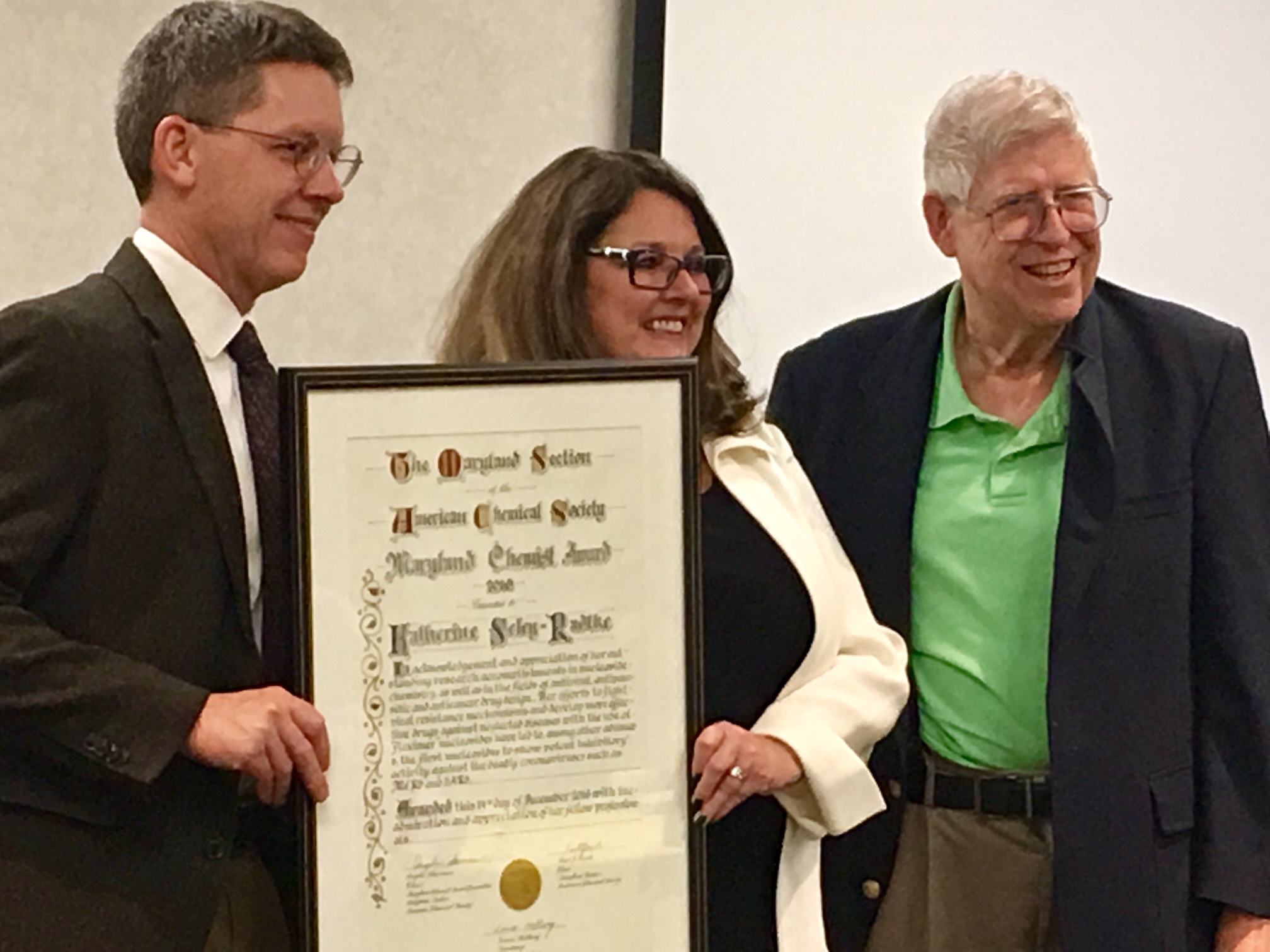
The Maryland Section of the American Chemical Society has selected Katherine Seley-Radtke, professor of chemistry and biochemistry and the 2016-2018 UMBC Presidential Research Professor, as the 2016 Maryland Chemist of the Year.

“It’s quite an honor,” Seley-Radtke says. “It’s important for UMBC and the chemistry department to have recognition on this level.” The top chemist prize is particularly competitive in Maryland, where a large number of chemists work at universities, government agencies, and the many science and technology companies in the region.

Seley-Radtke’s groundbreaking research focuses on drug development using nucleosides, molecules with a similar structure to the building blocks of DNA. In the last year, her research group published the first evidence of a nucleoside that inhibits activity of the MERS and SARS viruses. Her team has also made progress toward developing novel drugs to combat Ebola and Zika viruses.

Beyond her research at UMBC, Seley-Radtke is currently an elected board member of the International Society for Antiviral Research. She also served as the eighth, and first female, president of the International Society on Nucleosides, Nucleotides, and Nucleic Acids (IS3NA) in 2015 – 2016, after previously serving as vice president and secretary for the organization.

Seley-Radtke’s major accomplishment as president, she says, was to set up a scholarship program for young female scientists. The Chu Family Scholarships for Women in Science support activities that help young women build their skill sets and their confidence, such as traveling to work with collaborators or attending training workshops.

Katherine Seley-Radtke is recognized as Maryland Chemist of the Year. Previous UMBC recipients Michael Summers (left) and Joel Liebman show their support.

Seley-Radtke’s passion for supporting women and other underrepresented groups in the sciences extends to all areas of her work and service, as an educator, organizational leader, mentor, and researcher. “You have a duty to engage and help train the upcoming generation,” she says.

“It is also important to look out for students who come from non-traditional pathways,” Seley-Radtke emphasizes, sharing, as someone who took a non-traditional career path herself, “I wouldn’t be here without all of my mentors.” She offers support by taking time to develop close mentoring relationships with her students and writing hundreds of recommendation letters each year.

Seley-Radtke also recognizes the need for interdisciplinary training for today’s students. She is the current director of UMBC’s Chemistry/Biology Interface Graduate Training Program. Funded by the National Institutes of Health, UMBC, and University of Maryland, Baltimore (UMB), the program supports graduate students in pharmaceutical sciences (at UMB), chemistry, biochemistry, and biology. Students in the program have a Ph.D. mentor in their home department and pursue an aspect of their dissertation research in one of the other disciplines, which can help them develop the necessary interdisciplinary expertise to tackle complex challenges in the field.

Seley-Radtke received the Maryland Chemist of the Year award at a celebration in December. Paul Smith, professor of chemistry and biochemistry and president of the Maryland Section of the American Chemical Society, nominated her “based on both her outstanding accomplishments and leadership in the area of medicinal chemistry,” he shared, “and her tireless promotion of women and minority students in chemistry.”

Previous recipients from UMBC include Michael Summers, a Howard Hughes Investigator, the Robert E. Meyerhoff Chair for Excellence in Research and Mentoring, and University Distinguished Professor of chemistry and biochemistry, and Joel Liebman, professor of chemistry and biochemistry. Reflecting on the number of UMBC scientists to reach this level of recognition, Seley-Radtke says, “It’s a good example for students to realize that hard work pays off, and that they could do this, too.”

Banner image: Katherine Seley-Radtke; photo by Marlayna Demond ’11 for UMBC.


Physicists Deffner and Ibrahim explain winter’s extra helping of static electricity

Winter has arrived in the northern hemisphere, and along with it an extra dose of static electricity. But do most people know how static electricity works? Why is it more prevalent in the winter months, and how can people prevent those nasty shocks?

Sebastian Deffner, assistant professor of physics, and Muhammed Ibrahim, a research collaborator in his lab, demystify static electricity in a new piece in The Conversation, republished on Phys.org and by newspapers across the United States.

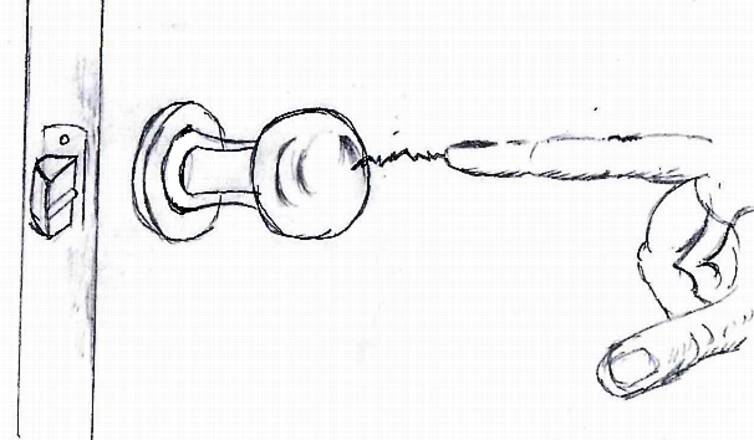
“Static electricity comes down to the interactive force between electrical charges,” Deffner and Ibrahim write. Electrons coat every surface, but some surfaces hold onto those electrons more tightly than others. When two materials with different abilities to retain electrons come close together, “electrons can be ripped out of the ‘weaker’ materials and find themselves on the material with stronger binding force.” The zap we feel is the electrons moving from one surface to the other.

Drier air is the culprit for increased static in the winter. Moisture in the air allows electrons to flow more freely and return to their original surface without shocking anyone. But when the air is dry, “electrons get trapped on the surface with the stronger binding force,” Deffner and Ibrahim explain.

static zap

“They can’t find their way to flow back to the surface where they came from,” they write, “and they can’t make the distribution of charges uniform again.” Until, that is, the object that has strongly attracted the electrons, like your finger, come close to an object that hasn’t collected as many electrons, like a doorknob or your cat. Then the electrons flow quickly onto the uncharged object, creating the classic static electricity “zap.”

There are ways to avoid the pain, though. Deffner and Ibrahim recommend dryer sheets to take static down a notch on clothing. They also suggest running a humidifier to boost the amount of moisture in the air in a home or office.

The first known recorded observation of static electricity is from the sixth century B.C., and in the 18th century people mostly took advantage of static for parlor tricks. Today, Deffner and Ibrahim write, static electricity is put to use in everything from office copiers and smartphones to cutting-edge nanotechnology.

Learn more from “Static electricity’s tiny sparks.”

Banner: A boy’s hair gets charged with static electricity as he rides a playground slide; Ken Bosma, CC BY.

UMBC economist comments on the impact the new administration’s policies could have on job growth

As the calendar turns to 2017, many Americans will be looking for a fresh start in finding a new or better job. With that in mind, analysts at WalletHub conducted a study to determine the best job markets in the U.S. and they consulted a panel of experts for context of what job growth will look like in the new year.

Christine Yee, an assistant professor of economics, spoke with WalletHub and addressed a number of issues including her prediction for the job market in 2017, the impact the new administration’s policies will have on job growth, the fields that are expected to grow most in the coming decades, the biggest challenges facing job seekers today, and the most common mistakes job seekers make when seeking employment.

Yee described how public spending contributes to slightly more than one-third of GDP. With the incoming Trump administration, she shared her thoughts on how specific sectors of the economy could perform in the new administration.

“Given the current discussion about potential policies under the new administration, spending on defense and infrastructure is expected to increase, which would increase the number of jobs in those sectors. However, the growth in healthcare spending is expected to slow down, which would in turn reduce the number of additional jobs in that sector,” she argued.

Looking at the future of the American economy, Yee predicted that healthcare, energy, artificial intelligence, and transportation will be the fields that grow the most in the coming decades.

As many people in the workforce look for new jobs during the new year, Yee offered advice for job seekers in a competitive economy.

“We all need to have the right skill set to be competitive in a global and changing economy, and we need to adapt to new technology and workflows,” she said. “Employees and employers alike need to understand how they can bring value to their customers.”

Read the full article “2017’s Best and Worst Cities for Jobs” on the WalletHub website.

Professor Yee has research interests in health economics, public policy, applied econometrics, and labor economics. Read more about her work on the economics department website.

Image: Christine Yee speaks during a Dresher Center “CAHSS Micro Talks” event at UMBC. Photo by Marlayna Demond ’11 for UMBC. 

Thomas Schaller discusses origins of the Electoral College on WEAA

Note: This article was updated January 27, 2017. 

Donald Trump will be sworn in as the next president of the United States on January 20 after losing the popular vote but winning the Electoral College. Thomas Schaller, professor and chair of political science, recently joined WEAA’s The Marc Steiner Show to discuss the origins of the Electoral College, what it means for the U.S. democracy, and how the election results reflect the U.S. population today.  

“The Founding Fathers, I think in one of the most ironic twists of the Electoral College…really didn’t think it would necessarily be the…final selection mechanism,” Schaller said on the program. “In a way, they envisioned the Electoral College often working like the nomination processes do now.”

He suggested the founders’ intent was to use the Electoral College as a process for winnowing down the field to a few top contenders, with presidential elections ultimately being sent to the House of Representatives for a vote if none of these more regional candidates claimed a majority.

Schaller also discussed how the Electoral College result in the 2016 presidential election reflects the high degree of partisanship in contemporary American politics. He noted that President Obama carried 44 of the 50 largest counties in 2012, and Hillary Clinton carried 30 of the 35 largest cities, while Donald Trump received, in many cases, 80 percent or higher of the popular vote in white, rural counties.

“We have a situation where all this talk of red America and blue America… We don’t talk to each other,” said Schaller. He suggested, “there is a certain truth to that as we have one America concentrated in the cities and inner suburbs, and we have another America that lives physically far from those areas and maybe psychologically farther from those areas.”

Schaller is an expert in American politics and American political institutions and author of The Stronghold: How Republicans Captured Congress but Surrendered the White House (Yale University Press, 2015) and Whistling Past Dixie: How Democrats can Win without the South (Simon and Schuster, 2006). He was joined on the show by David Dayen, contributor to The Nation and the author of Chain of Title: How Three Ordinary Americans Uncovered Wall Street’s Great Foreclosure Fraud.

Listen to the full segment, “Electoral College roundup.”

Update: Ian Anson, an assistant professor of political science, and Nick Miller, professor emeritus of political science, appeared on Maryland Public Television’s “Direct Connection” program to discuss the Electoral College and if there’s any possibility of the system changing in the future. Watch the full segment in the video below. 

Image: Thomas Schaller speaks during the 2016 Post-Election Forum at UMBC. Photo by Marlayna Demond ’11 for UMBC. 

Ellen Handler Spitz grapples with Stéphane Mallarmé’s greatest work in New Republic

Many scholars over the years have attempted to understand the true meaning of French Symbolist poet Stéphane Mallarmé’s “Un Coup De Des Jamais N’abolira Le Hasard” (One Toss of the Dice Will Never Abolish Chance), which is widely considered to be his best and most influential work.

In a recent article in New Republic, Honors College Professor Ellen Handler Spitz, responding to a new book by Yale professor R. Howard Bloch, explains how the poem was largely influenced by Mallarmé’s own life story. She writes that tragic deaths in his family over the course of his life could have played a significant role in his thinking behind the poem, written a year before his death in 1898.

“To read Mallarmé’s poetry against a backdrop of repeated unpreventable tragic human loss is to attune oneself to its elegiac aspects. Knowing this, we can better understand how, in ‘Un Coup de Dés,’ the empty space never feels empty,” Spitz explains.

Throughout the article, Spitz writes that Mallarmé grappled frequently with the world and with the grief around him by putting his feelings into words and trying to understand what was being represented.

Spitz, who is the author of six books on the arts and psychology, writes: “An overlooked gift of the poem may be its unwitting revelation that Modernism itself is haunted by loss, that is, by a rejection of traditional ways of containing emotion, however inadequate. Another may be that psychology, proffering lenses of value, deserves not to be, in literary discussions, forsworn.”

Read “The Poem that Foretold Modernism” in New Republic.  

Image: ‘Portrait of Stéphane Mallarmé’ by Édouard Manet, 1876 / Wikimedia Commons. 

Amy Froide examines the role of women investors in England’s financial revolution on WYPR

Note: This story was updated on January 27, 2017. 

Amy Froide, acting chair and associate professor of history, recently appeared on WYPR’s Humanities Connection to talk about her new book Silent Partners: Women as Public Investors during Britain’s Financial Revolution, 1690-1750 (Oxford University Press, 2016).

The book examines the role of women investors in England’s financial revolution and explains how many women played a critical role in Britain’s rise to economic, military, and colonial dominance in the 18th century.

Silent Partners Amy FroideIn her audio essay for Humanities Connection, Froide explained that women of all ranks were early-adopters of the stock market in the 17th and 18th centuries by investing in stocks and shares for their families and British government-run state lotteries.

“Female investors exercised various types of financial agency. They actively managed portfolios of stocks they inherited, instead of passively collecting dividends; they served as financial agents or brokers, and they engaged in legal and political business with companies,” Froide explained.

Froide referenced examples such as Sarah Churchill, the Duchess of Marlborough, whose investments had an impact on Britain’s interest rates, and the noblewoman Eleanor Curzon, who sued the South Sea Company and won.

“Collectively, female investors enabled Britain’s rise to a military, economic, and colonial power in the 1700s, and women’s capital was a critical component of British imperialism. These ‘financial patriots’ are now brought to life and are silent partners no more,” she added.

Froide’s areas
 of expertise include social, economic, social, women’s, and gender history. Her other books include Never Married: Singlewomen in Early Modern England
 (Oxford University Press, 2005) and Singlewomen in the European Past, 1250-1800 (University of 
Pennsylvania Press, 1999), co-edited with Judith M.
Bennett. She has served as the book review editor for the Journal of British Studies, President of the Mid-Atlantic Conference on British Studies, and 
the founding Director of UMBC’s Entrepreneurship & Innovation Minor. Read more about her work on the history department website.

Froide’s book Silent Partners was published on December 13. Listen to the full Humanities Connection segment on the Maryland Humanities website.

Update: Times Higher Education published a review of Froide’s book on January 26, 2017. Victoria Bateman, the reviewer, wrote: “Froide adds to an important burgeoning literature that suggests that, far from being passive responders to capitalism, blown in the wind by its rough nature, women were actively involved. Whatever you think about capitalism, this new understanding of the past demands a reassessment of the way we think about the interactions between capitalism and gender. Coming back to earth, it also offers some of those all-important role models for our daughters today.”

Read the full review “Silent Partners: Women as Public Investors during Britain’s Financial Revolution, 1690-1750” on the Times Higher Education website.

Header image: Amy Froide in her office.