We use cookies for analytics and, unless you opt out, advertising.
You can opt out of advertising at any time.UMBC uses essential cookies to run this site. With your permission we would also use analytics cookies (to understand how the site is used) and advertising cookies (to measure and target our ads on other platforms). Nothing else loads unless you accept. You can change your choice any time from Cookie Settings in the footer.Privacy Policy
EssentialRequired for the site to work (login, security, your cookie choice). Always on.
UMBC doctoral students are reaping the benefits of an innovative partnership between UMBC and biotech leader Genentech. In year three of a five-year program, sixstudents have received financial support and started conducting research with the company through Genentech Fellowships. In addition, many more students have benefited from regular contact with Genentech senior scientists through their on-campus lecture series.
By supplying training opportunities in industry before graduation—the kind of preparation that has not always been supplied in traditional life science programs—the relationship between UMBC and Genentech is opening doors to a wider range of careers for graduate students in the life sciences.
Hands-on training at Genentech
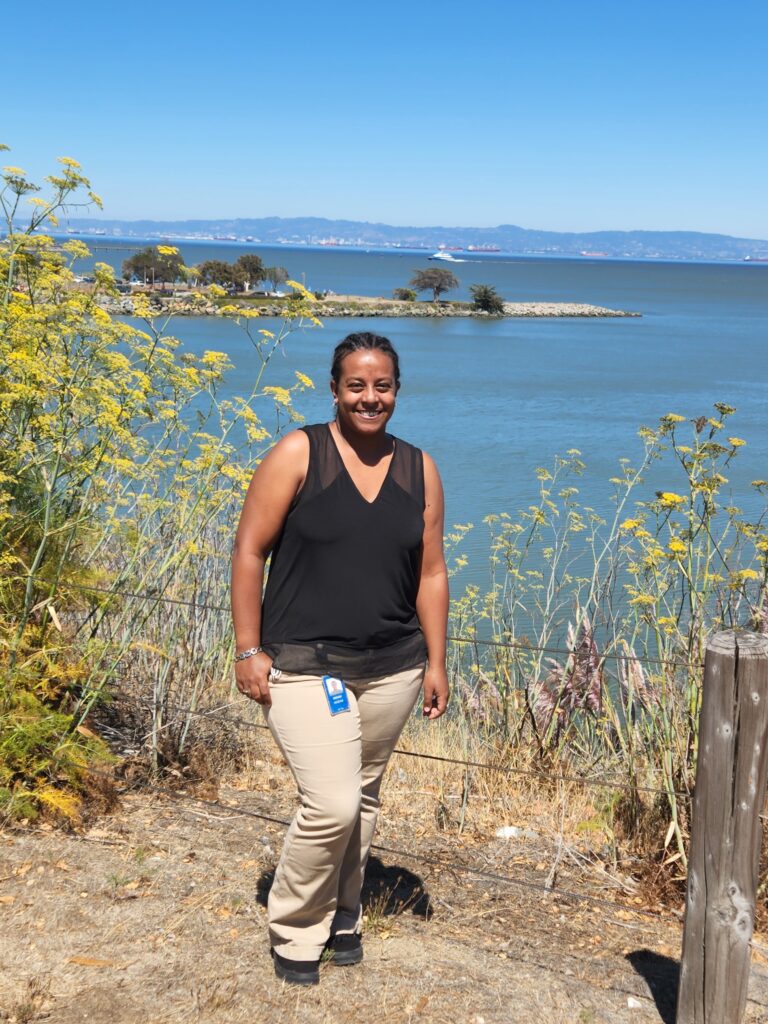
Maki Negesse on the Genentech campus in South San Francisco, California. (Photo courtesy of Negesse)
Each year during the five-year agreement, Genentech fully funds two life science Ph.D. candidates in the Meyerhoff Graduate Fellows Program who are progressing well through their doctoral work and have expressed interest in pursuing a career in industry. Selected students continue their thesis work with their Ph.D. advisors during the academic year; then they spend the summer as research interns at Genentech headquarters in South San Francisco, California. Alecia Dent ’12, biochemistry and molecular biology, who earned a Ph.D. at University of Maryland, Baltimore as a Meyerhoff Graduate Fellow and today works at Genentech, has generously helped the fellows acclimate to life on the West Coast by offering lodging at her home.
The internship at Genentech “was a great opportunity to grow my network and get hands-on training in a different area of expertise, and a great way to gain some industry experience,” shares Maki Negesse, a biological sciences Ph.D. candidate in Erin Green’s research group at UMBC.
When fellows return to UMBC, they present their research and experience at Genentech to all of the current Meyerhoff Graduate Fellows—a group that includes more than 100 UMBC and University of Maryland, Baltimore graduate students. In addition, Genentech scientists give multiple seminars at both campuses each year.
“My experience at Genentech has strengthened my desire to pursue a career in biotech companies,” Negesse adds. “I highly recommend that students pursue at least one internship during graduate school.”
Proactive steps for success
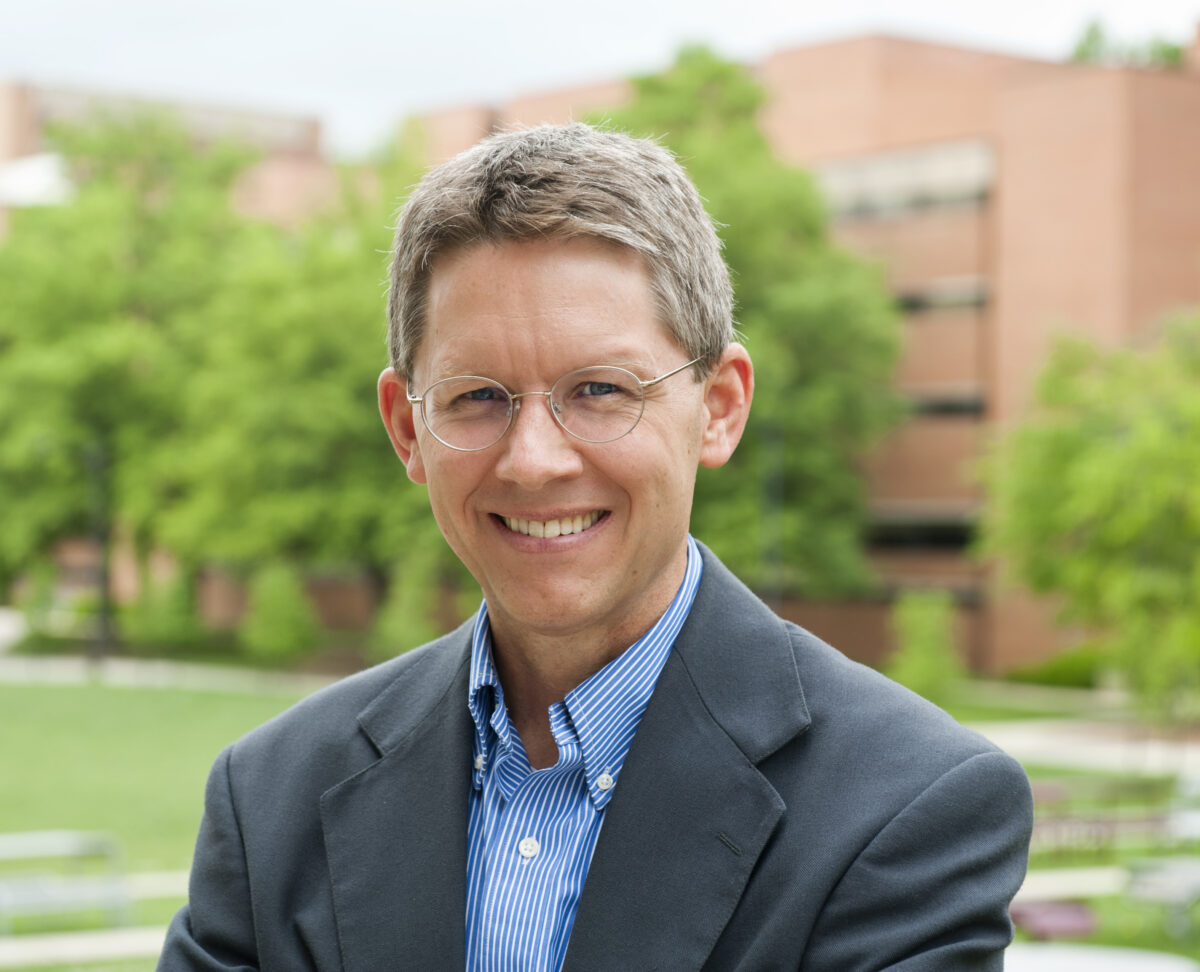
Michael Summers played a key role in the development of the Meyerhoff Graduate Fellows Program. (Photo by Marlayna Demond ’11/UMBC)
The partnership signals that UMBC is proactively taking steps to ensure its graduate training programs set students up for success in various high-demand roles. Genentech, too, is committed to supporting the next generation of highly qualified biotech workers.
“Graduate programs in the life sciences are historically geared toward preparing Ph.D. students for academic careers. This partnership fills a gap in graduate education by providing on-site training at a world-class company for students who are interested in careers in the biotechnology industry,” shares Michael Summers, Distinguished University Professor of Chemistry and Biochemistry and co-director of the Meyerhoff Graduate Fellows Program. “It also provides opportunities to diversify the scientific workforce at Genentech, providing a win-win for the company and our students.”
A new study in the Journal of Neurosciencehas discovered underlying sex differences in the molecular pathways that drive reward-related behaviors. In particular, the study found differences and similarities in the ways males and females strengthened connections between two brain regions—the hippocampus and the nucleus accumbens—involved in reward signaling.
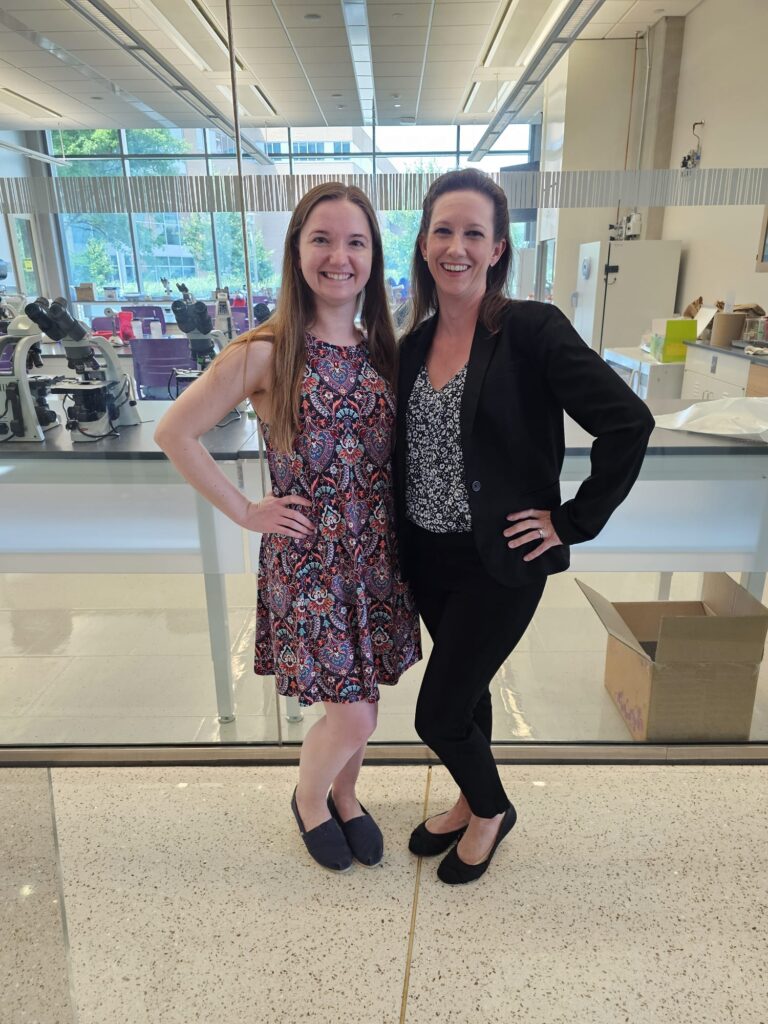
Ashley Copenhaver (left) has been working on her Ph.D. with Tara LeGates (right) since 2021. (Photo courtesy of Copenhaver)
Males and females both suffer from disorders involving these pathways, like depression and substance abuse. However, the presentation and prevalence of these conditions can differ between the sexes, and certain standard treatments are more effective on average in males or females. The new paper’s findings encourage further research to determine if the molecular differences the authors discovered may underpin differences in disease progression or medication response, which could eventually lead to more effective treatments for mental health disorders.
Although this is changing, historically, much more research has been done on male subjects (both in humans and animal models), so “we just don’t know a lot about female brains and differences between male and female brains,” says Tara LeGates, assistant professor of biological sciences and senior author on the new paper. She’s seen an increase in the number of research groups considering sex differences, and is hopeful that their work will continue to produce actionable results that lead to improved outcomes for patients.
LeGates’ previous work used optogenetics, which allows researchers to selectively stimulate particular neurons with light, to demonstrate that strengthening connections between two brain regions—the hippocampus and nucleus accumbens—is rewarding for mice. The hippocampus is best known for its roles in memory and learning, as well as emotional responses. The nucleus accumbens is a “key reward center that integrates information from different brain regions to drive goal-oriented behavior,” LeGates explains.
The hippocampus-nucleus accumbens pathway also exists in humans, and is involved in reward processes in the same way as in mice, LeGates notes, making this research highly translatable to human studies.
Surprising sex differences
The researchers used electrophysiology, which involves observing how living cells respond to stimulation of other brain regions under a microscope, to reach their conclusions about how males and females strengthen connections between the hippocampus and nucleus accumbens.
LeGates and lead author Ashley Copenhaver, a Ph.D. candidate in LeGates’ research group, found that mice of both sexes relied on activation of a particular kinase protein, CAMKII, to facilitate reward-related behavior. Neither sex required dopamine activation, which was surprising, because dopamine is commonly involved in reward-related signaling.
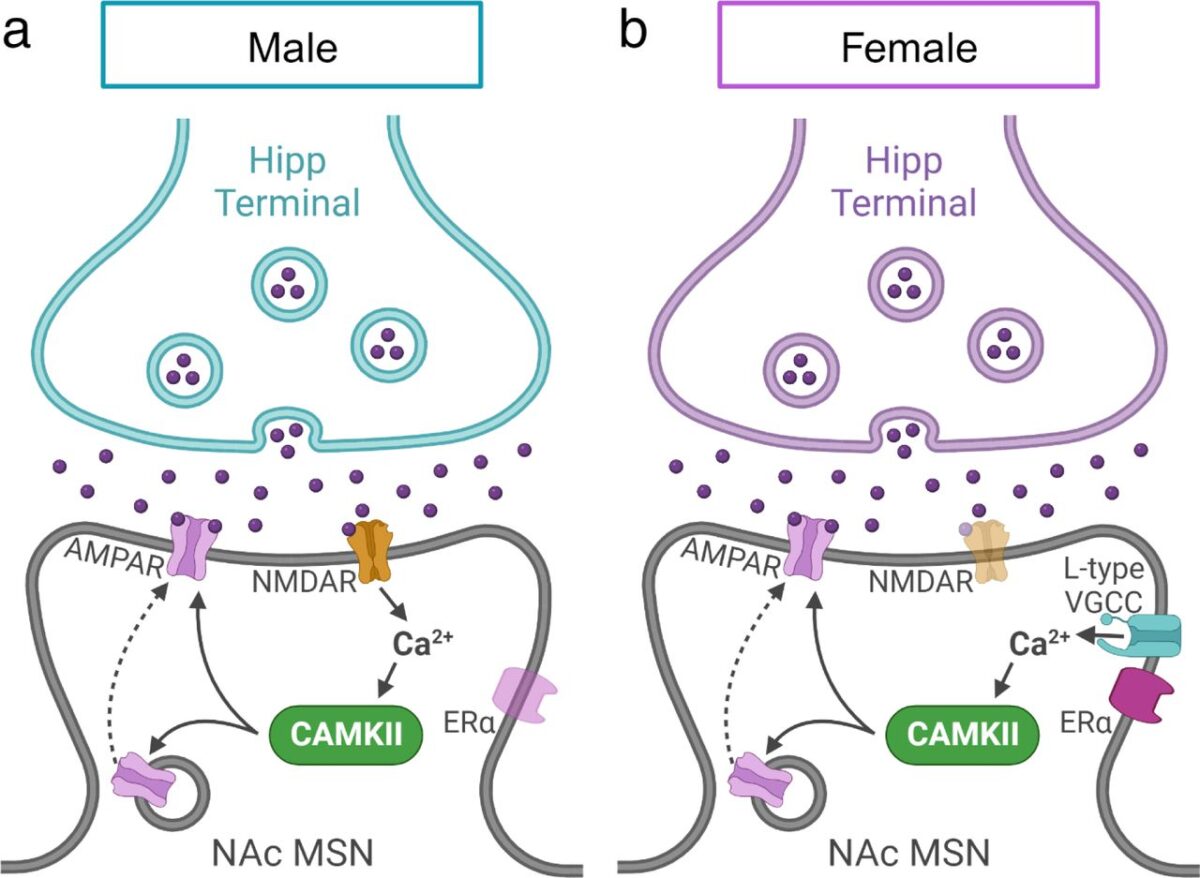
The neurotransmitter receptor NMDA is also commonly involved in reward pathways and strengthening connections between brain regions. The researchers found that male mice were using NMDA receptors to strengthen connections between the hippocampus and nucleus accumbens, but females were not. Instead, the females used a different channel for calcium ions and an estrogen receptor.
“We were really surprised to find this sex difference,” Copenhaver says. Because the NMDA receptor pathway is so commonly assumed to be at play, “It was just really fascinating to see, not only are males and females using different mechanisms, but one is using this NMDA receptor-dependent mechanism, whereas females are not,” Copenhaver says. “They’re using this other, non-canonical pathway—these alternative calcium ion channels. We weren’t expecting that at all.”
Figure 8 from Copenhaver and LeGates’ paper visually represents the similarities and differences in how males and females strengthen synapses between the nucleus accumbens and hippocampus. The NMDA receptor (gold) is required for transporting calcium into the cell (gray outline) in the male mechanism, whereas females use a different calcium transport receptor (teal) and an adjacent estrogen receptor (magenta).
Revealing these differences and similarities is an important step toward making a real difference in medical care for patients.
“If you want to understand susceptibility and develop better treatments, you have to understand the mechanisms at these synapses,” LeGates says. “You have to understand what’s happening, and you have to understand it in each of the sexes.”
New approaches for better results
Legislation required human studies to include males and females in the early 1990s, but not until 2015 did the National Institutes of Health set policy that animal studies—which are frequently used to justify further human research—must also include both sexes. As a result, there are still many open questions about how male and female physiology differs, and many opportunities to make contributions with significant biomedical impact.
LeGates became more interested in studying sex differences in brain function during her postdoctoral fellowship at the University of Maryland School of Medicine. “I think that one of the problems with trying to do sex difference research is that you’re trying to use things that have been optimized to work in male animals,” LeGates says, “and then when it doesn’t play out in females, it’s just like, ‘Oh, it’s unreliable.’ But what if it’s that the tests were optimized in males, and that’s why they don’t work in females?”
“I wanted to pursue that and appreciate the male and female differences and not try to force them into the same exact paradigms,” she adds. “Maybe we need to come up with new paradigms and a new way to approach how we study them.”
Over the last two years, Emily Faber, Ph.D. candidate in atmospheric physics, painstakingly replicated part of a NASA climate model on UMBC computing systems. She compared the model’s predictions to on-the-ground data collected at meteorological stations run by the National Oceanic and Atmospheric Administration (NOAA)—and she found significant differences between the two.
Specifically, the NASA model predicted wind speeds in some places above the Arabian Peninsula that differed from the observed measurements by two meters per second, even when Faber looked at the average over 20 years. Wind speed in that region, which is mostly desert, influences the presence of dust in the atmosphere, which, in turn, plays a role in everything from the greenhouse effect to nourishing the Amazon rainforest.
“I was really surprised at the magnitude of the differences,” Faber says. “It’s a model miss. We’re not modeling wind speed as well as we could.”
That’s why she created the replicate model—so she could tinker with the parameters, refining the model so it more accurately reflects reality. A publication on her results is under review, and the findings have significant implications for global climate modeling and forecasting. This will also be Faber’s first, first-author paper, which is an important milestone for any graduate student.
Model mentors
Faber’s latest modeling work would not have been possible without the Weather Program Office Innovation for Next Generation Scientists (WINGS) Dissertation Fellowship, sponsored by NOAA. Faber was one of only three fellows selected for the program’s inaugural year. The fellowship, which began in summer 2023, supplies two years of full funding for her dissertation research and provides Faber with a dedicated NOAA mentor. Her mentor, Barry Baker, Ph.D. ’14, atmospheric physics, has always been supportive and responsive to Faber’s probing questions, she says—“which is great, because I have many.”
“Emily is extremely motivated and shows the characteristics for a long and successful career within the science community. I’m excited to be working with her and help guide her through this stage of her education,” Baker says. “Emily’s work through the WINGS Fellowship will end up having direct impacts on the operational forecasts using the Unified Forecast System that NOAA provides to give advance warning of extreme particulate matter pollution caused by wind-driven processes.”
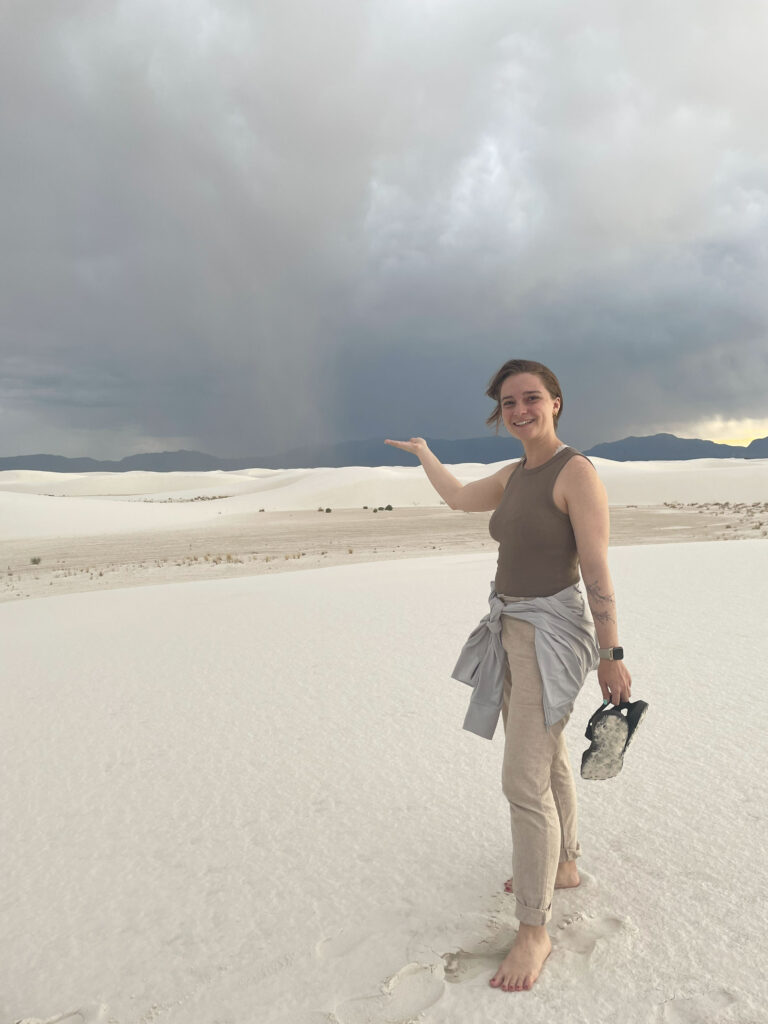
The White Sands National Monument is a great place to observe dust, which is the focus of Emily Faber’s atmospheric research. (Photo courtesy of Faber)
Adriana Rocha Lima, Ph.D. ’15, atmospheric physics, and an assistant professor of physics at UMBC, serves as Faber’s Ph.D. advisor. Faber says she appreciates Rocha Lima’s consistent encouragement and has had many opportunities to mature as a researcher under her mentorship. Faber was full of creative, ambitious research ideas when she approached Rocha Lima about joining her lab—but didn’t yet have a clear understanding of how to implement them, Faber says. “But she didn’t run away from that,” Faber says of Rocha Lima. Instead, Rocha Lima welcomed Faber into the lab and quickly got her started on both modeling and observations-based projects.
Rocha Lima is the rare physicist who has expertise in both modeling and experimental work. “There’s not a challenge I think she couldn’t handle,” Faber says.
Getting up to speed
As Rocha Lima’s first graduate student, Faber found herself in a unique position to help the lab grow from the ground up. That included opportunities to write grants and apply for fellowships, including WINGS, very early in her graduate school career.
With all that practice, “Now I know how to do it,” Faber says. “I know how to get funding and how to write a scientific statement to fit three years of work into two pages or less.”
“It’s actually helpful to have someone advising me who doesn’t have English as a first language, because if I write something and she doesn’t get it the first time, it’s not clearly communicated,” Faber adds. Rocha Lima is originally from Brazil and is a native speaker of Portuguese.
Faber has also enhanced her scientific acumen since she joined Rocha Lima’s lab in 2021. “In the beginning, she was learning how to run the model, repeating prior analyses,” Rocha Lima says. “Now she’s exploring new territory. That’s the contribution that we want to see from a Ph.D. student.”
Faber feels the shift, too. “The real building that I’ve gone through in this program is to be able to talk to other scientists who are in it and be up to speed,” she says. “I’m just now in the last year or so getting to that point where you can fire off questions and add your own ideas.”
The value of connections
As part of the WINGS fellowship, Faber traveled to the National Center for Atmospheric Research (NCAR) in Boulder, Colorado for a workshop on the United Forecast System (UFS), a huge integrated set of analysis systems that look at everything from ice to dust to vegetation in order to model the Earth as a comprehensive system.
At the workshop, Faber met some of the key people working with various systems she is interested in at NOAA. And months later, at the national American Meteorological Society conference, she saw many of them again. “Out of several thousand humans, I was like, ‘I know you, I know you, I know you…’ and I wouldn’t have known them without going out to Boulder,” Faber says.
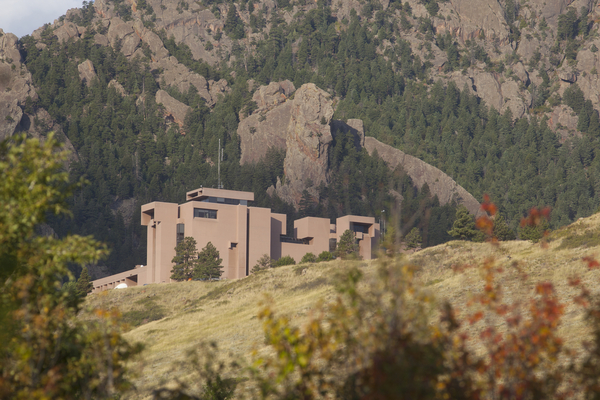
The Mesa Laboratory of the National Center for Atmospheric Research, located outside Boulder, Colorado, complements the scenic backdrop, which features the iconic Flatirons rock formations. (Photo courtesy of NCAR)
The two other WINGS fellows also attended the workshop, and the three of them have stayed in touch since. “It feels like a tiny cohort,” she says. “We do very different things, but we overlap at some point. We’re all working in the UFS system.” Faber is looking forward to meeting the incoming class of WINGS fellows, too.
Everyone wins
The WINGS program is a major stepping stone for Faber toward her long-term goal of working at one of the national laboratories, a network of research institutions across the country associated with various federal agencies.
In particular, “I really vibe with the NOAA mission,” Faber says, and the WINGS program has “turned out to be a really great interface between the national labs and the university.”
The fellowship furthers Faber’s personal career trajectory, and it also supports Rocha Lima’s growing lab by providing funding for Faber’s Ph.D. As a result, Rocha Lima has been able to add an additional graduate student to her group. NOAA and NCAR also benefit from the energy, talent, and fresh ideas coming from the fellows. Although it is new, Faber and her mentors are looking forward to it continuing to support students and the pursuit of atmospheric research.
From its outset, UMBC’s STEM BUILD—a 10-year undergraduate success initiative and research study at UMBC funded by the National Institutes of Health—has had a unique vision: To emphasize the inclusive reach of the program, STEM BUILD’s motto is “500, not 50.”
The program, which is wrapping up its timeline, was created to identify effective interventions that could be implemented at scale to support all science, technology, engineering and math (STEM) students at UMBC, and to find ways to continue those interventions beyond the existence of STEM BUILD.
“Looking back on nearly 10 years of work, STEM BUILD has been nothing short of wildly successful,” said Justine Johnson, executive director of STEM BUILD and assistant dean for inclusive excellence in the College of Natural and Mathematical Sciences (CNMS).
A research study to support budding researchers
STEM BUILD was carefully designed as a controlled research study, where evaluators randomly assigned students accepted into the program into three cohorts: Trainee, Living Learning Community (LLC), and Comparison.
BUILD Trainees benefited from the most interventions, such as monthly community meetings, intensive monitoring and advising, and multiple group research experiences during “Summer Bridge” programming. Another cohort lived on campus in the STEM Living Learning Community (LLC)—which did not exist prior to STEM BUILD—along with the Trainees, but did not receive additional interventions. A third cohort consisted of similarly qualified students who did not receive targeted interventions or live in the STEM LLC.
According to an analysis by the evaluation team, by the end of their fourth year at UMBC, BUILD Trainees had increased their reported sense of “research self-efficacy,” or their own understanding of their competency as researchers, from 3.50 to 3.87 on a five-point scale, which registered at the highest level of statistical significance. Students in the other two cohorts shifted from 3.66 to 3.61, which was not statistically significant.
Victoria Baskerville ’19, biological sciences, and a BUILD Training program alumna, said the research experiences provided by the program were invaluable.
“They gave me the confidence to navigate in a lab space and gave me the competitive edge I needed to get my position as a technician in a prestigious lab,” said Baskerville, who is currently pursuing her Ph.D. in integrative and biomedical physiology at The Pennsylvania State University.
“I have often received positive comments regarding the amount of research experience I gathered as an undergraduate during interviews,” Baskerville said.
The percentages tell the story
Victor Omoniyi ’20, biological sciences, a former STEM BUILD Trainee, is currently pursuing a Ph.D. in neuroscience at Johns Hopkins University, in the cellular and molecular medicine program.
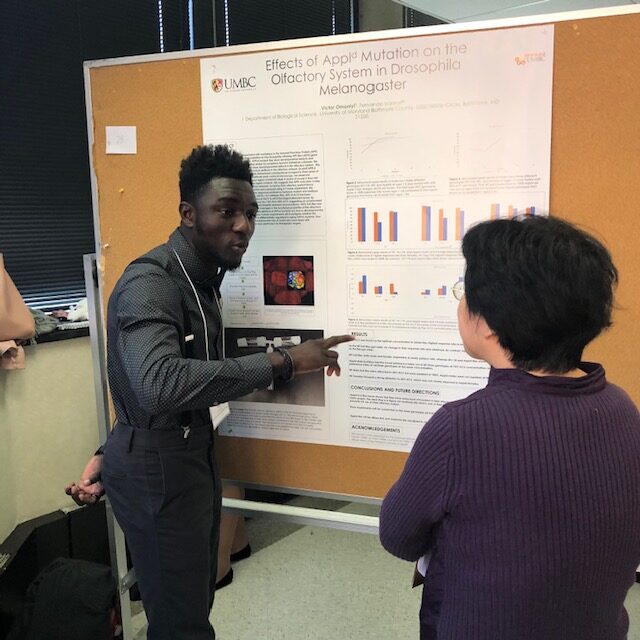
Victor Omoniyi (left) presents research at the 2019 UMBC Undergraduate Research Symposium.
“BUILD was helpful in starting my scientific journey and exposing me to different areas of research and people to network with, which has contributed significantly to where I am now, pursuing a Ph.D.,” Ominiyi said.
Ominiyi’s experience is not unique among Trainees. BUILD Trainees reported completing significantly more research experiences than students in the comparison groups: 45.4 percent completed one to three research experiences, 33.7 percent participated in four to six research experiences, and 9.9 percent completed seven or more research experiences. That’s compared to 53.1 percent, 10.6 percent, and 1.9 percent, respectively, in the comparison groups. Those experiences build students’ confidence with research and nurture relationships with mentors, which likely contribute to students choosing to remain in STEM and pursue graduate education.
Outcomes for BUILD Trainees in cohorts one through five, as of fall 2023, were similarly outstanding, with 56 percent of Trainees having completed a bachelor’s degree, 16 percent having completed or being enrolled in a master’s program, 13 percent attending professional school, and 11 percent pursuing Ph.D. or M.D./Ph.D. programs. All together, 96 percent of Trainees completed their undergraduate degrees, and 40 percent are actively pursuing or have completed an advanced degree.
Bridging the success beyond CNMS
STEM BUILD’s impact goes far beyond its direct benefits to BUILD Trainees. UMBC’s College of Natural and Mathematical Sciences has implemented numerous new programs as part of STEM BUILD that will continue supporting all students after BUILD officially ends—meeting the “500, not 50” goal.
For example, the Active Learning, Inquiry Teaching (ALIT) certificate program is designed to support faculty in adopting teaching approaches that foster the retention of students in STEM majors and support the development of their students as STEM professionals. Initially required for BUILD faculty mentors, today the program is available to all faculty in CNMS and UMBC’s College of Engineering and Information Technology, and a related program inspired by ALIT now also exists in the College of Arts, Humanities, and Social Sciences.
CNMS also developed new courses and summer programs, initially targeting STEM BUILD students but now open to all, focusing on ethics, communication skills, introductory laboratory skills, and more.
CNMS hired a success coach, who offers on-demand mentoring for students in skills like time management, exam preparation, and stress reduction. The coach also offers workshops through The Learning Collaboratory (TLC), another new CNMS initiative. A diversity mentoring program matches STEM students with mentors in STEM from underrepresented backgrounds.
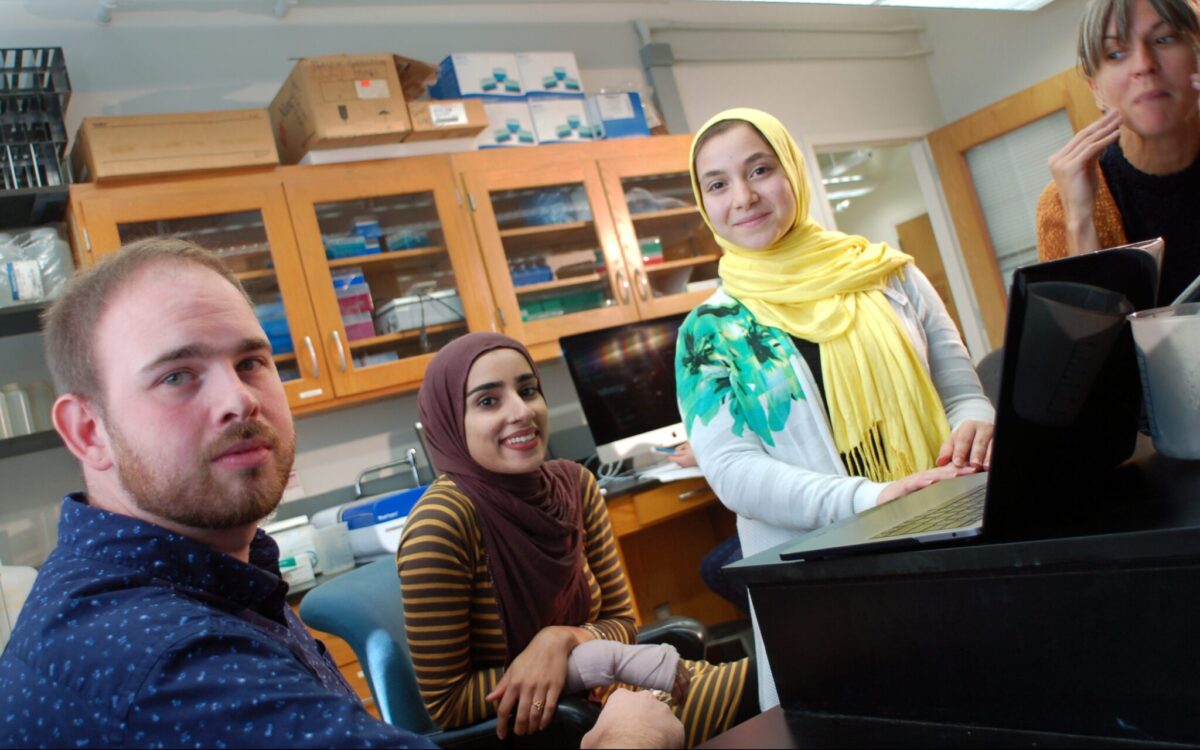
Michael Mercado (left), Zulekha Karachiwalla (center) and Rahaf Alhabashi (right) participated in the Build a Bridge to STEM Internship; Mercado’s ASL interpreter is at the far right. (Photo by Tim Ford)
BUILD has even benefited students who attend other universities.
The BUILD a Bridge to STEM Internship has offered students the opportunity to spend the summer at UMBC, learning laboratory skills and then working in small groups to conduct research with UMBC faculty members and present at UMBC’s Summer Undergraduate Research Fest. Students from regional community colleges, Morgan State University, and Gallaudet University all participated, the latter with the full-time support of ASL interpreters.
Long-lasting, sustainable change
Though STEM BUILD’s 10 years are coming to an end, the institutional change the program has enabled will endure at UMBC.
Dean William R. LaCourse has led STEM BUILD at UMBC for the last 10 years. (Marlayna Demond ’11/UMBC)
STEM students will have access to more and better training and professional development opportunities, faculty are employing more effective teaching and mentoring strategies, and scaffolded research experiences are available to prepare students for further study, explained William R. LaCourse, CNMS dean.
As the ideator and champion of many STEM BUILD initiatives that will continue, LaCourse is thrilled to see the impact those initiatives are having on students’ experiences and trajectories.
“It has been my passion and purpose to support all students, especially thosewho are in the middle of the achievement curve when they arrive at UMBC,” LaCourse said. “The STEM BUILD program showed that every student has the potential to excel as a scholar, if given the opportunity and support. By infusing the interventions developed in STEM BUILD into the four-year curriculum for all students, maybe our motto should have been ‘5,000, not 50.’”
Yehenew Kifle, assistant professor of statistics at UMBC, has been awarded a fellowship by the Carnegie African Diaspora Fellowship Program (CADFP). Kifle will travel to Addis Ababa University (AAU) in Ethiopia to work with the Department of Epidemiology and Biostatistics. There, he will work with colleagues to enhance teaching and mentoring and grow research collaborations to support Ph.D. training in biostatistics.
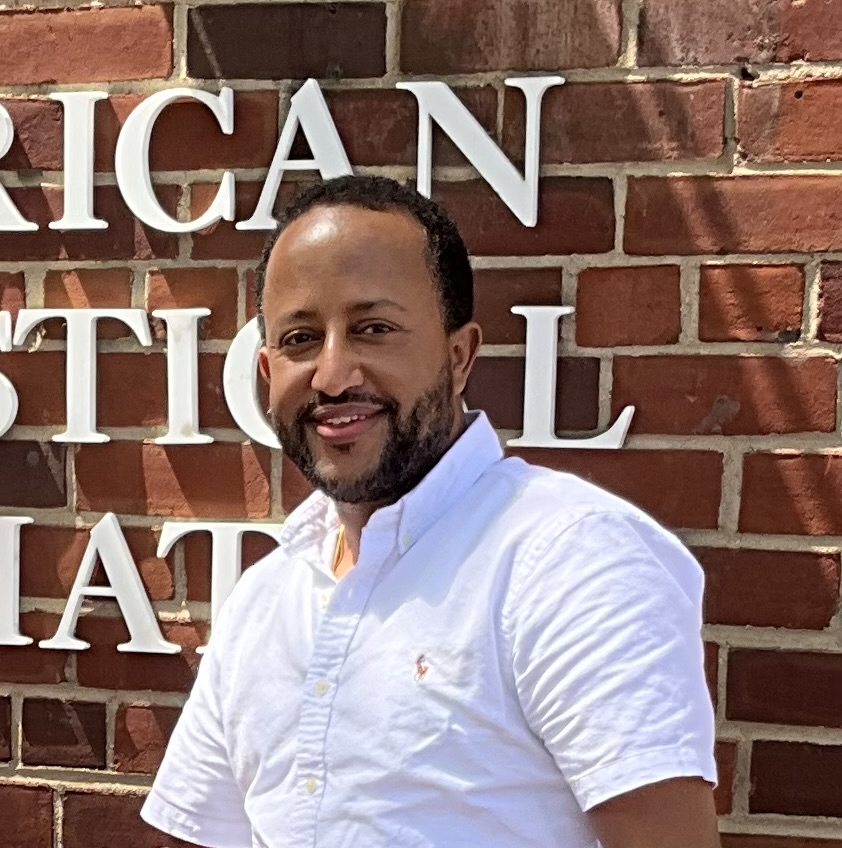
Yehenew Kifle visited the American Statistical Association in April 2024, around the signing of the agreement between the ASA and UMBC related to the African International Conference on Statistics. (Courtesy of Kifle)
Kifle will spend three months in Ethiopia this summer, working with his African host, Zeytu Gashaw Asfaw, associate professor of biostatistics at AAU. In addition to producing collaborative research, during his stay Kifle plans to conduct short-term training sessions and workshops on advanced software-aided statistical techniques for junior statisticians, graduate students, and medical professionals within the school of public health at AAU. He will also assist in crafting grant proposals aimed at increasing research collaborations in biostatistics between UMBC and AAU.
The Carnegie African Diaspora Fellowship Program, now in its 10th year, is designed to strengthen capacity for graduate education at host institutions and develop long-term, mutually beneficial collaborations between universities in Africa and the United States and Canada. It is funded by Carnegie Corporation of New York and managed by the Institute of International Education (IIE) in collaboration with the Association of African Universities. Nearly 650 fellowships have been awarded since the CADFP’s inception in 2013.
“I’m grateful for the opportunity to represent the University of Maryland, Baltimore County in its international outreach endeavors, highlighting the importance of CADFP,” Kifle says, adding, “I’m looking forward to sharing my expertise in teaching biostatistics graduate courses, offering mentorship, and supervising doctoral dissertations.” Additionally, Kifle plans to conduct seminars on his recent research findings and offer insights into improving graduate programs in biostatistics.
Building on international connections
Before arriving at UMBC, Kifle was a professor of statistics at the University of Limpopo in South Africa. UMBC signed a collaborative agreement with University of Limpopo in 2018, initiated by Kifle while he was a visiting faculty member from Limpopo at UMBC. Kifle first encountered UMBC’s strength in statistics at the 2015 African International Conference (AIC) on Statistics, a UMBC-led conference held in a different African country annually since 2014.
Since then, Kifle has been a leader in organizing the AIC, which recently received a pledge for support from the American Statistical Association. The Carnegie fellowship builds further on Kifle’s commitment to forging partnerships with African universities for the mutual benefit of scholars at UMBC and in Africa.
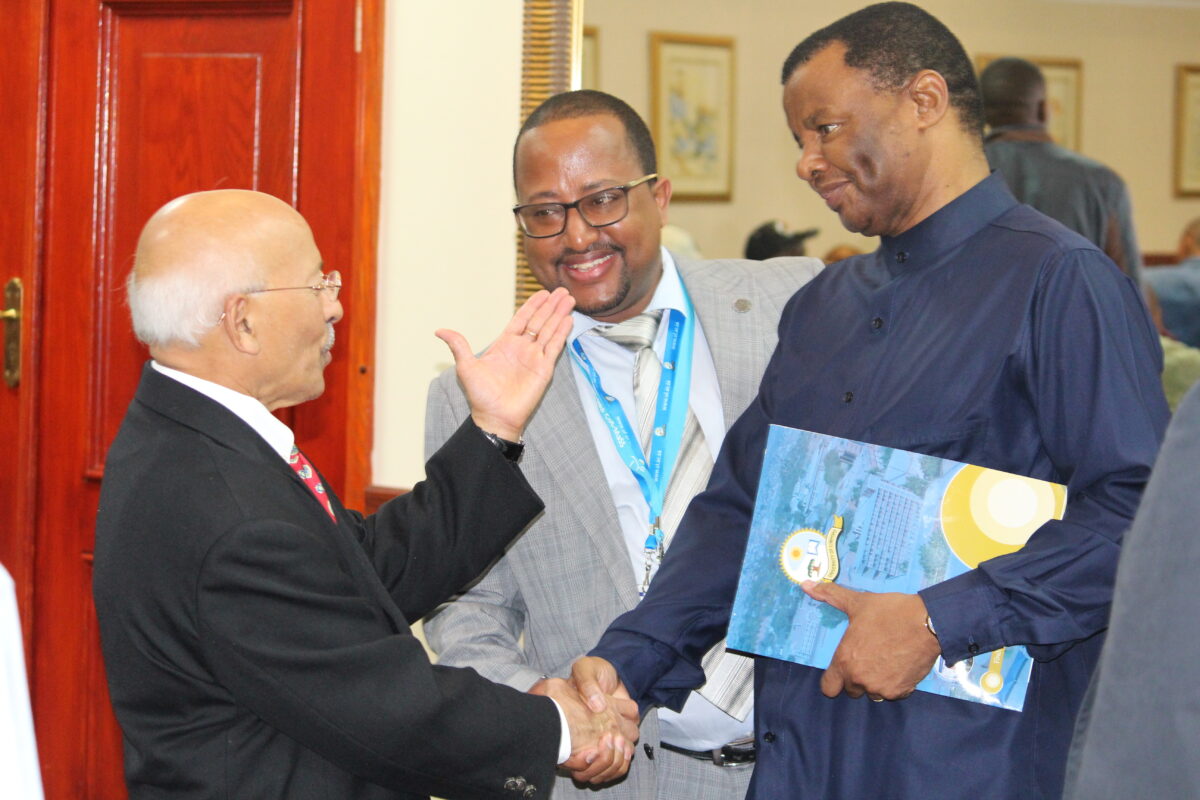
Bimal Sinha (left), professor of statistics at UMBC, and Yehenew Kifle (center), assistant professor of statistics at UMBC, with N.M. Mokgalongs, president of University of Limpopo, at the 4th Annual African International Conference on Statistics. (Courtesy of Kifle)
Kifle’s work in Ethiopia is one of 60 new projects supported by the CADFP that pair African diaspora scholars with higher education institutions and collaborators in Africa to work together on curriculum development, research, graduate training, and mentoring activities in 2024.
“This is indeed exciting news for all of us in the department and at UMBC,” shared Bimal Sinha, professor of statistics at UMBC. “We are thrilled to know that Dr. Kifle will represent UMBC in this extraordinary outreach effort to offer seminars and training courses and possibly to jointly supervise doctoral dissertations. There is no doubt that many statistics departments in Ethiopia will benefit from Dr. Kifle’s vast teaching and research experiences.”
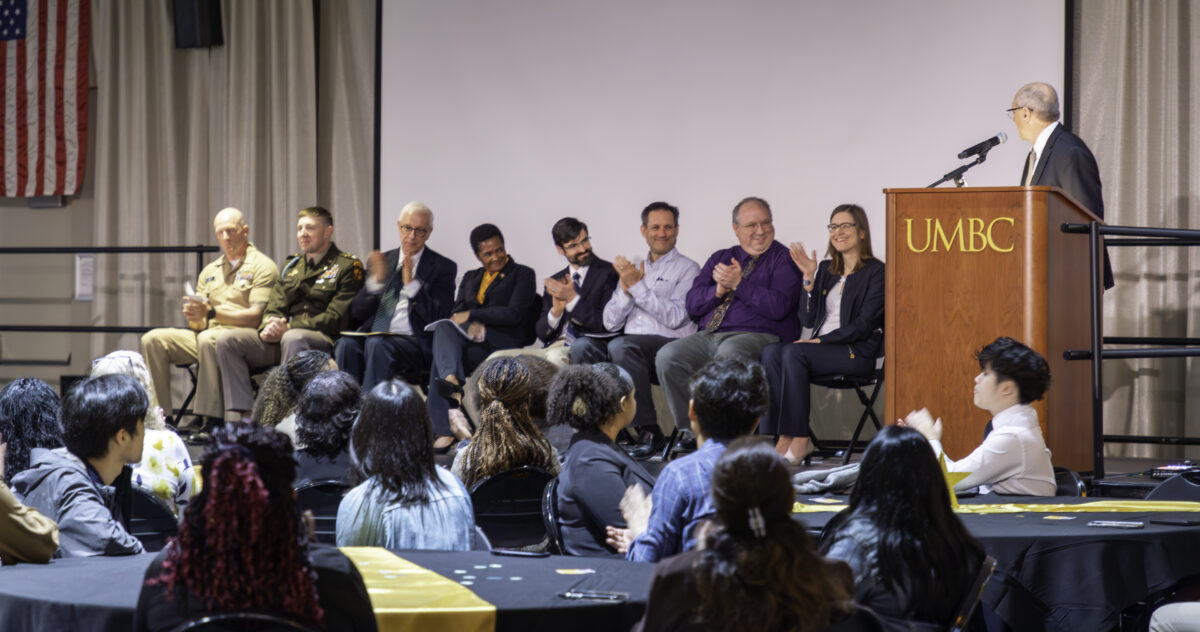
The College of Natural and Mathematical Sciences (CNMS) held its annual CNMS Awards and Recognition Day on May 10. Nearly 270 UMBC community members and friends attended the event in the University Center Ballroom. The department chairs presented 45 awards established by donors in support of students, faculty, and staff, such as the Carl S. Weber Award for Excellence in Teaching, awarded this year to Tamra Mendelson, professor of biological sciences.
“I would like to thank the members of the UMBC community—alumni, parents, faculty, staff, and friends—who have made possible many of the awards we are presenting here today. These are not just names on a page—they are stories of gratitude and giving, honoring loved ones and families,” shared William R. LaCourse, CNMS dean. “You are fueling the academic success of our students, helping us recruit and retain top-notch faculty, ensuring support for programs and people across the university, and inspiring others to give. On behalf of UMBC, thank you!”
The recognition day also honored eight CNMS faculty at all levels with Faculty Excellence Awards for research and teaching designated by the college, awarded college-level Staff Excellence Awards for outstanding service, and distributed departmental awards for undergraduate and graduate students recognizing academic excellence, research, and teaching.
Dean LaCourse, at the podium, introduced the awards ceremony, and individual chairs or their designees presented the awards to members of their departments. From left to right: Commander Christopher Boehm, naval science; Captain John Howrey, naval science; Yonathan Zohar, professor and chair, marine biotechnology; Annica Wayman ’99, mechanical engineering, associate dean for Shady Grove affairs; Jason Kestner, associate professor and associate chair, physics; Bradford Peercy, professor, mathematics; Brian Cullum, professor and chair, chemistry and biochemistry; Michelle Starz-Gaiano, professor and chair, biological sciences. (Melissa Penley Cormier, M.F.A. ’17/UMBC)
CNMS also celebrated students who had been inducted into national honor societies, including Sigma Pi Sigma, the physics and astronomy honor society; Pi Mu Epsilon, the national mathematics honor society; Mu Sigma Rho, the national statistics honorary society; and the Phi Beta Kappa Society, which recognizes overall academic excellence.
LaCourse closed the ceremony by recognizing students in scholars programs within the college. The CNMS Scholars program supports students interested in the advancement of women in STEM fields where they are still underrepresented, and the Beckman Scholars program, funded by the Arnold and Mabel Beckman Foundation, supports students desiring to pursue doctoral study in the biological and chemical sciences.
“Students who have been recognized at this ceremony have met UMBC’s academic requirements and have excelled at high levels in their academics and/or service to their departments, college, and university,” LaCourse shared. “These honorees are poised to become scientists, physicians, mathematicians, teachers, and leaders in their chosen fields. These students are our leaders of the future, and we are fortunate to have the opportunity to help provide the critical foundations for their promising futures.”
The full event program, including additional remarks from Dean LaCourse and a complete list of awardees and award descriptions, is available here.
Maxfield Hartley ’24, physics, is an “exceptionally talented student with a truly inquisitive mind,” according to his mentor, Associate Professor Sebastian Deffner. Max’s undergraduate research applying thermodynamic principles to music bends the mind, but leaves one wanting to know more—and his enthusiasm is contagious. Later this summer, Max is headed to an interdisciplinary and international doctoral program at the Okinawa Institute of Science and Technology in Okinawa, Japan.
Q: How did you connect with your mentor, physics professor Sebastian Deffner?
A: I took his thermodynamics class. It was one of the most interesting classes I’ve taken. I had been told that it was the hardest class in the physics major, and I just asked a ton of questions. Sometimes after class, I would have more questions, so I would follow him to his office and then to the dining hall—that was just how many questions I had. Over lunch, we’d talk about physics, or we’d talk about careers—because at this point I wasn’t really sure I wanted to be a physicist.
One of the things that made me feel more comfortable doing this was that in the second week of the semester he asked me to come to his office after class. And I was like, “Oh no. What have I done? He’s going to give me a talking to.” Which made what happened even more surprising. I sat down across from him and he said, “Max, you’re a very talented student.” And I said, “Thank you!” And he said, “No, it’s not a compliment, just an observation,” in the most German way you can possibly imagine.
It meant a lot. So even though I wasn’t necessarily awash in my own self-generated confidence, having him say that made me think, “Well, maybe he’s right. Maybe there’s something to this.” So I felt more confident after that. It was a big moment for me.
Then, I officially joined Dr. Deffner’s research group and got started on a really interesting project.
Hartley (right) and Deffner have grown close since Hartley joined Deffner’s research group. (Marlayna Demond ’11/UMBC)
Q: Tell me about the project.
A: It’s essentially a data analysis project, where we apply an analysis that is usually reserved for physical particle trajectories to musical melodies. In the same way that the particle trajectory is a series of positions, we think of a melody as a series of pitches.
Our central quantity is the entropy, which increases in an irreversible physical process. Irreversible means that it is vanishingly unlikely for the process to happen in reverse. In our analysis of music, we are interested in seeing if the “musical entropy” that we calculate increases over time, indicating irreversibility or directionality in music.
In general, I have always been interested in creating objectively defined quantities that can be used to analyze why music sounds the way it does to us. The possibility of creating a modern music theory which borrows ideas from thermodynamics is very cool to me. Then, we would be able to describe certain sounds as “hotter,” “colder,” “higher energy,” or “more entropic.” We could also go the other way, thinking of certain thermodynamic processes as more “consonant” or “dissonant.”
From our results so far, it looks like overall music does have some level of irreversible directionality that is similar to what we see in thermodynamics. We’re running some additional analyses now, such as controlling for the music’s key signature and comparing the results from music in different genres, and then we plan to submit our findings to a physics journal.
Q: How has Deffner supported you and your growth as a researcher?
A: Dr. Deffner has pushed me to have experiences in the physics department I might not have otherwise had. For example, he recruited me to volunteer with the Science Olympiad held for high school students at UMBC, and that experience was quite rewarding and fun. Dr. Deffner also answers all of the random physics questions I come up with, and he has assigned his postdoc, Emery Doucet, to help me with my project. I’ve had many useful conversations with Emery, and his generous guidance has helped me understand a lot better how to organize and scope a research project.
Deffner’s large research group includes postdoctoral fellows, graduate students, and undergraduates. (Marlayna Demond ’11/UMBC)
Q: What advice would you give to someone who’s uncertain about their major?
A: First, it’s hard to make big decisions. That’s what I struggle with. So I actually came into UMBC undeclared. I knew I wanted to do something in STEM, and I took as many classes as I could that would apply to all of the majors related to my wide-ranging interests.
I was considering computer science or computer engineering, and in my sophomore year, I sat down with my mom and told her I needed to decide what I wanted to do. I looked at physics, and everything—from the introductory courses to the 400-level classes—looked really cool. And I thought, well, that’s a good sign. Decision-making is still something I find difficult, though. Ask me about that one when I’m older!
My best advice for getting inspired is to knock on people’s doors and talk to them! Find a professor who’s studying something you think you’d possibly be interested in and have a conversation. Most professors will be quite happy to do this. Also, ask a lot of questions in class! It’s difficult, because the more questions you ask, the more chances you have to come off as a fool, but my advice is to embrace the experience of coming off as a fool. Over time it won’t bother you as much. Also, a majority of the time you’ll actually ask a question that somebody else was wondering about.
Q: Now that you’ve chosen physics, what would you say drives your passion for it?
A: First, I find thermodynamics in general interesting because it is more of an approach to physics than simply a branch of physics. In thermodynamics, we’re modeling a system about which we only have macroscopic information. The actual microscopic dynamics of the many molecules in a glass of water are incredibly complicated, but we cannot directly observe them, and we don’t actually care all that much.
Instead, we model properties we can observe, like heat and work, and we can still learn a lot about the glass of water. We dump everything we don’t know about what’s happening at the microscopic level into one variable, which we call the entropy. This act of encoding our ignorance in one variable, and developing a coherent theory around the quantities which we can measure, is very appealing to me.
What is the concept of “work” in physics? Work is what happens when force is applied to an object and the object moves in the direction of the force.
Second, I believe that using this type of thinking, thermodynamic thinking, is one of—if not the most—powerful tools in our quest to really understand what’s going on in the quantum world. What I mean by “really understand” is to answer questions such as: Why do quantum systems behave differently when we are measuring them? What precisely constitutes a measurement for that matter? Why do the weird quantum properties go away when we assemble many quantum objects (i.e. atoms) into a larger non-quantum object (i.e. my desk)?
Why do I think that thermodynamic thinking in particular is well suited to this? Well, it gets back to the ignorance aspect. Quantum mechanics is built on uncertainty: Certain quantities cannot be known precisely at the same time, and measuring a quantum system always changes the system in a very noticeable way. In these aspects, quantum theory is full of things we cannot know, and this is just begging to be treated through a phenomenological, thermodynamic lens.
Q: What’s next for you?
A: I looked at a lot of grad schools, and I found one that stood out among the rest: the Okinawa Institute of Science and Technology in Okinawa, Japan. I was accepted and will be leaving for Japan in August. The Institute seems amazing for several reasons. Most importantly, the people there are studying very interesting things, including a research group focusing on thermodynamics and quantum systems and another on information theory and space time. They’re ultimately trying to figure out quantum gravity, which is sort of the big thing in physics today, and they’re doing it through information theory.
One of the very unique things about the institute is that they don’t have academic departments. They only have research groups—they call them units—and they’re encouraged to work together. They try to break down the walls and just be a community of people learning stuff. In the buildings, they put people of different disciplines next to each other, so there’s lots of opportunities for interaction and collaboration.
I’ve never been to Asia at all, but I’ve always wanted to go to Japan. The entire program is taught in English, and it’s very international. You have students from different countries, with only a few graduate students there from each. They even provide housing and cover students’ travel to Japan. I’m super excited to start this next chapter and see where it leads me.
Volunteers led by enthusiastic students and Office of Sustainability staff removed invasive plants on campus; a panel at the AOK Library & Gallery discussed how various disciplines, including the arts, can engage with environmental conservation; the UMBC community watched a partial solar eclipse on campus; and much more.
The month of festivities culminated with the 8th Annual Earth Day Symposium on April 29, organized by graduate students in atmospheric physics and geography and environmental systems (GES). Nearly 150 attendees from at least six universities and five federal agencies gave talks, participated in panel discussions, presented 26 research posters, and even went on a hike through UMBC’s Conservation and Environmental Research Area on an unseasonably warm day.
“A tradition we are really proud of is that this event is 100 percent planned and implemented by our graduate students,” shared Zhibo Zhang, professor of physics at UMBC. He noted the event not only benefits the attendees, but also the planning team. “I’ve seen their confidence grow every day as the event came together,” Zhang says.
“It has been a great experience for us to invite such a wide range of people with shared enthusiasm for Earth science to UMBC,” shares Kamal Aryal, Ph.D. student in atmospheric physics and the lead organizer for the Earth Day Symposium. “Having students, early career scientists, and university professors from many universities and from NASA’s PACE mission, including the lead project scientist for PACE, attend our symposium creates great opportunities for networking and professional development.”
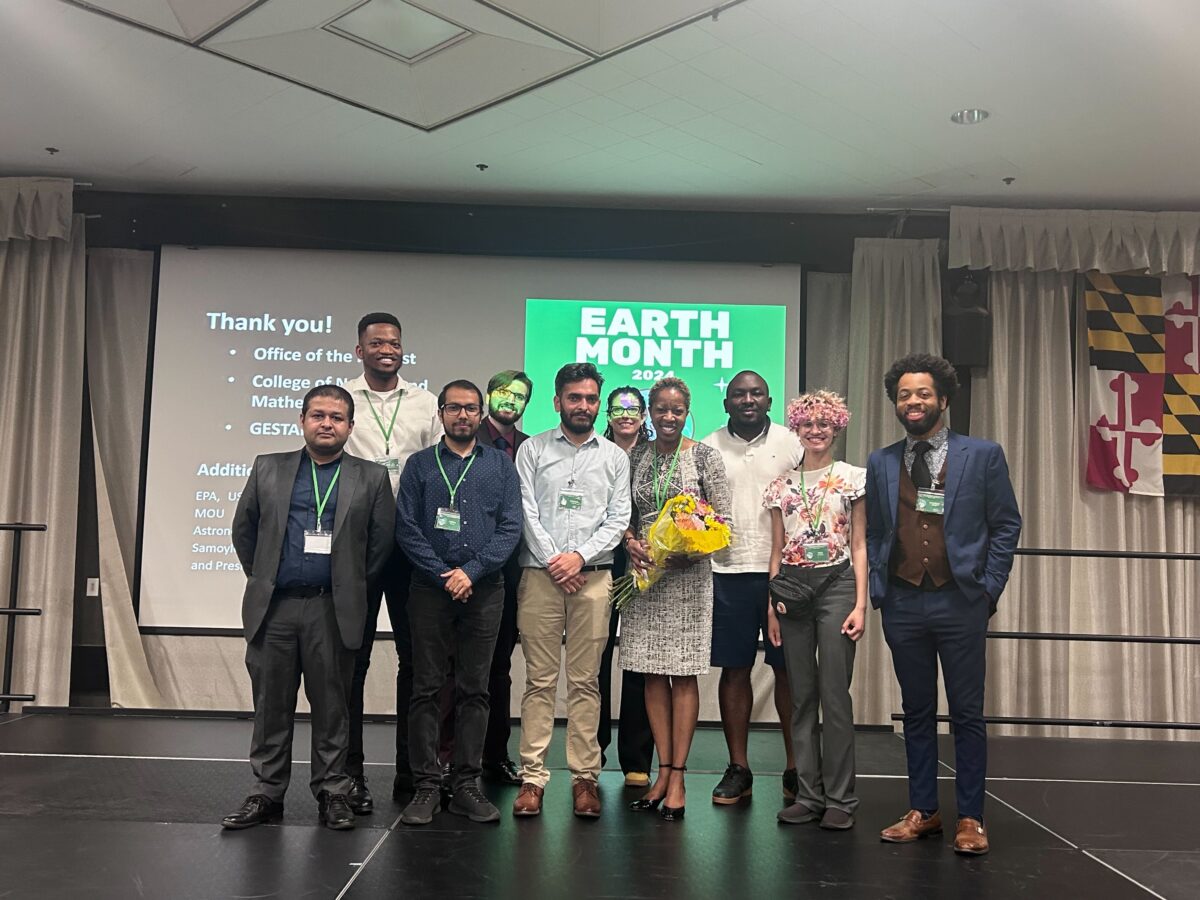
Planning committee members for the Earth Day Symposium and other Earth Day events with President Valerie Sheares Ashby. Left to right: Sharad Pandey, Adeleke Segun Ademakinwa, Kamal Aryal, Tony La Luna, Roshan Mishra, Rhonda Plofkin, Valerie Sheares Ashby, Tolulope Ale, Erin Hamner, and Maurice Roots. (Image by Zhibo Zhang)
Monitoring the environment—from above Earth’s atmosphere to underwater
First organized in 2017, the Earth Day Symposium has grown in stature, size, and scope every year. This year’s theme was “monitoring planetary health,” a nod to the recently-launched NASA PACE mission carrying HARP2, a polarimeter designed and built at UMBC. HARP2 will improve our understanding of the roles various particles in the atmosphere—like dust, water vapor, and pollutants—play in climate and health. Previous symposium themes have included the environmental impacts of COVID-19, the synergy of scientific disciplines, and equity and environmental justice.
Vanderlei Martins, professor of physics at UMBC and the HARP2 team lead, gave the first presentation, which was followed later in the morning by a panel discussion including PACE scientists from UMBC, NASA, and Morgan State University.
The three main instruments on PACE have complementary roles. Each sees Earth a little differently, and will provide important data on plankton populations in the ocean, the role of clouds in Earth’s energy balance, and much more. “Each of these instruments is unique, and together, they are amazing,” Martins says. HARP2 “has capabilities we’ve never had before,” he adds. “I cannot even imagine everything we are going to learn.”
Between Martins’ talk and the panel, Vanessa Vargas-Nguyen, a researcher with the University of Maryland Center for Environmental Science (UMCES), discussed her work on monitoring the health of the Chesapeake Bay watershed. UMCES produces one of several report cards for the Chesapeake Bay, collecting data on everything from populations of bottom-dwelling critters to concentrations of elements like phosphorus and nitrogen, which are commonly found in fertilizers. Now Vargas-Nguyen is expanding her group’s work to look at the entire watershed more holistically, including adding social factors like economic activity, governance structures, and population density.
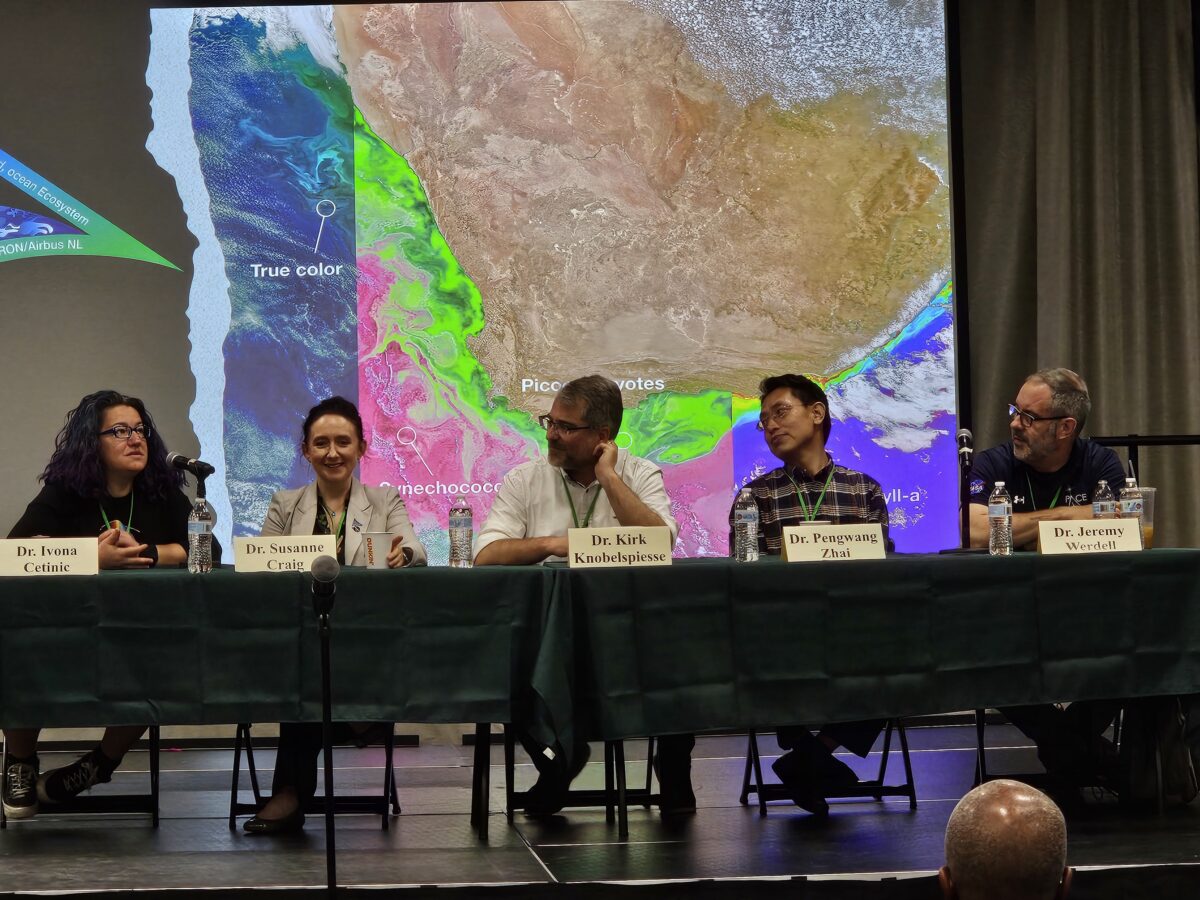
Panelists discussed the PACE mission. From left to right: Ivona Cetinic, senior research scientist with Morgan State University through the Goddard Earth Science and Technology Research Center (GESTAR) II; Susanne Craig, scientist with UMBC through GESTAR II; Kirk Knobelspiesse, researcher at NASA Goddard Space Flight Center; Pengwang Zhai, professor of physics at UMBC; and Jeremy Werdell, project scientist for the PACE mission at NASA. (Photo by Kamal Aryal)
A hub for environmental action
After the post-lunch hike, a poster session featured student and faculty research from UMBC, NASA, and the National Oceanic and Atmospheric Administration. Jing Wei, from the University of Maryland, College Park, discussed remote sensing methods for monitoring air pollution, and Robert Foster, from the U.S. Naval Research Laboratory, explained his work on monitoring microplastics in the ocean. Kandis Boyd, from the EPA, emphasized the importance of interdisciplinary and cross-sector partnerships.
Throughout the day, the ballroom buzzed with energy as students, UMBC faculty, and researchers from around the region shared their science and connected with each other. A shared sense of purpose guided the event, grounded in UMBC’s commitment to promoting a sustainable future.
As Charles Ichoku, director of the Goddard Earth Science and Technology Research Center II, one of UMBC’s NASA partnerships, and a professor of GES, put it, “UMBC is a young university that does great things.”
Whether taking immediate action to improve the campus landscape, conducting research on global climate, or training the next generation of Earth scientists, the month of Earth Day events demonstrates how UMBC has positioned itself as a hub for environmental action.
Jonas Miller, Ph.D. candidate in the marine, estuarine, and environmental science graduate program, has received the 2024 University System of Maryland Board of Regents Student Excellence Scholarship for Academics, Scholarship, and Research. Only four graduate students across the system receive Student Excellence Scholarships—one each in four categories.
Miller has been conducting research under the mentorship of Yonathan Zohar, professor of marine biotechnology at UMBC, at the Institute of Marine and Environmental Technology (IMET) since January 2022. Miller’s work is central to enhancing sustainable land-based aquaculture of Atlantic salmon, an area in which Zohar is a world leader. Specifically, Miller is searching for genetic biomarkers in female salmon that predict the timing of spawning and the quality of the spawned eggs.
The end goal is to promote a consistent supply of domestic salmon for consumers by generating populations of fish that spawn at staggered times throughout the year, triggered by different light and temperature conditions in land-based facilities.
“Receiving the Board of Regents scholarship has provided me with the motivation to propel my research to the next level on my quest to find new predictive biomarkers pertaining to Atlantic salmon reproductive endocrinology,” Miller says.
“Jonas is a talented student able to formulate hypotheses and test them, methodically designing and carrying out experiments using the most advanced methods of genomics and endocrinology,” Zohar wrote in his letter recommending Miller for the scholarship. “His multi-year studies have already generated innovative findings, and his ongoing work will undoubtedly result in much more data and lead to scientific advances and, potentially, economic development opportunities.”
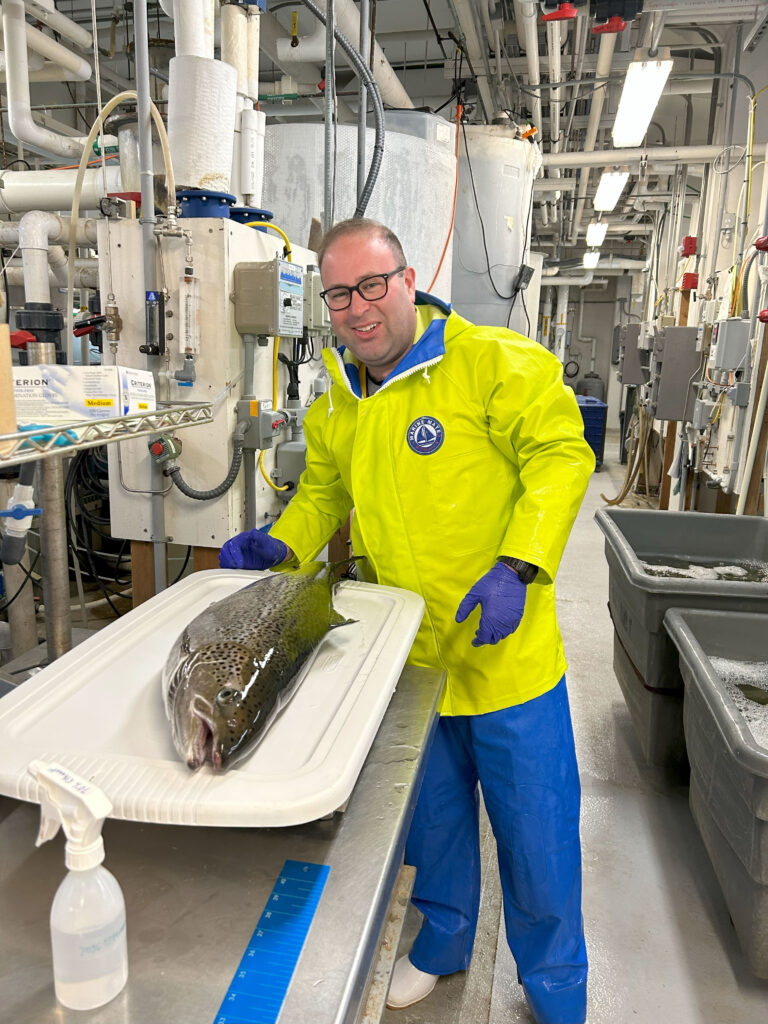
Left: Jonas Miller stands with a fish raised in the Aquaculture Research Center, the main laboratory for aquaculture research at IMET. (Courtesy of Miller)
Ongoing ripples of impact
Jonas Miller mentors numerous students who participate in marine research. (Courtesy of Miller)
Miller’s contributions have gone far beyond the impact of his research. He served as IMET’s Graduate Student Association president for the 2022 – 2023 academic year, teaches weekly English classes to Chinese graduate students at IMET, and has mentored three high school students volunteering in Zohar’s research group. Miller also authored an 80-page white paper for the National Oceanic and Atmospheric Administration on the potential for tuna aquaculture in the United States.
“His understanding of the aquaculture field and the relevant literature, as well as his personal experience working on bluefin tuna in Japan, is of great benefit to his colleagues,” Zohar adds. Those colleagues include not only researchers at IMET, but also collaborators at the U.S. Department of Agriculture, University of Maine, University of Wisconsin-Stevens Point, and University of Maryland, College Park. Researchers at these institutions and others are involved in various projects led by Zohar, including a $10 million effort funded by the USDA to address specific challenges in the aquaculture industry.
When the personal propels the professional
Miller expressed gratitude to Zohar for the opportunity to work with him, and to his collaborators, “who have all made my experience as a Ph.D. student both fruitful and exciting.”
Miller’s accomplishments have not come without adversity, however. “I’d like to dedicate this scholarship to my best friend David Pardo Hernandez, and to my mom, Sheila Mann Miller, both of whom tragically and unexpectedly passed away during my first year as a Ph.D. student at UMBC in 2022,” Miller shares. “Finally, thanks to my dad for encouraging me to study fish biology and for constantly motivating me to study harder.”
“I am grateful to all of my friends at IMET who have given me support,” Miller adds. “I wish my mom and best friend were here to experience this. They would both be really proud of this accomplishment. They motivated me to work hard and I hope that I made them proud.”
On April 12, more than 150 students, staff, and faculty attended the first College of Natural and Mathematical Sciences (CNMS) GradFest in the University Center Ballroom. The event was the result of listening sessions held with CNMS graduate students last summer, and it addressed their desire for more opportunities to forge interdepartmental connections and present their research.
“Every day, I hear about the great work being done by graduate students and postdocs in CNMS departments,” William R. LaCourse, CNMS dean, shared in his opening remarks. “Today is my chance to meet all of the graduate students the faculty are always bragging about.”
The event began with six “lightning talks,” where Ph.D. students were challenged to present the big idea of their thesis projects in only five minutes. Naghmeh Akhavan, mathematics, led off, presenting her project on cell migration in fruit fly development. She is co-mentored by Brad Peercy in mathematics and Michelle Starz-Gaiano in biological sciences. Misti Cartwright, chemistry and biochemistry, discussed her work with Aaron Smith on a post-translation protein modification called arginylation.
Sandra Cheng, physics, talked about her work with Todd Pittmanin quantum computing, and Manju Ojha, chemistry and biochemistry, explained her work on RNA-based plant viruses with Deepak Koirala. Ji Li, statistics, described a protocol he developed under the mentorship of Yi Huang to improve data sets for randomized controlled trials. And Prableen Chowdhary, biological sciences, explained her work with Rachel Brewsteron zebrafish development.
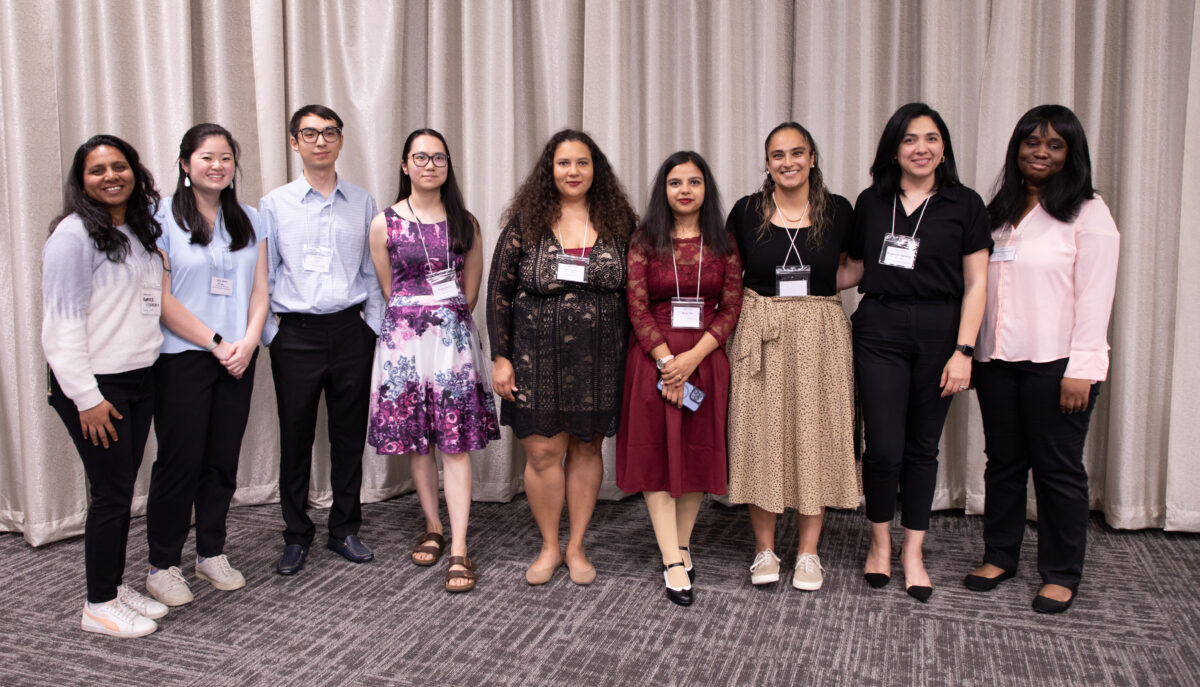
GradFest lightning talk presenters and the planning committee, from left to right: Ronita Sequeira, Ally Kido, Ji Li, Sandra Cheng, Misti Cartwright, Manju Ojha, Prableen Chowdhary, Naghmeh Akhavan, and Ayokunnumi Ogunsanya. (Image by Melissa Penley Cormier, M.F.A. ’17)
After the talks, two sessions featuring 46 posters allowed attendees to learn about the presenters’ research, ask questions, and make suggestions. A novel arrangement of posters in the ballroom facilitated interaction: Placing four posters each on round tables allowed guests to meander among the posters in many directions, unimpeded by long, linear poster displays.
Tasty mocktails, hors d’oeuvres, and desserts rounded out a successful event that brought graduate students and postdocs—collectively, the research engine of UMBC—together to socialize, practice presenting, and learn about each other’s work.
The eighth iteration of the African International Conference on Statistics(AIC), scheduled for June 2024 in Tunis, Tunisia, will mark a new era for the conference. Originally championed by Bimal Sinha, UMBC professor of statistics, the first AIC took place in 2014 in Senegal. Each conference since has been held in a different African country in collaboration with local institutions.
In 2018, relationships that grew out of the conference led UMBC to sign a collaborative agreement with the University of Limpopo in South Africa to foster academic exchange. At that time, Yehenew Kifle, assistant professor of statistics, was a visiting professor at UMBC and a faculty member at the University of Limpopo. Today he has taken the helm of the AIC from the soon-to-retire Sinha, who remains a core member of the planning committee.
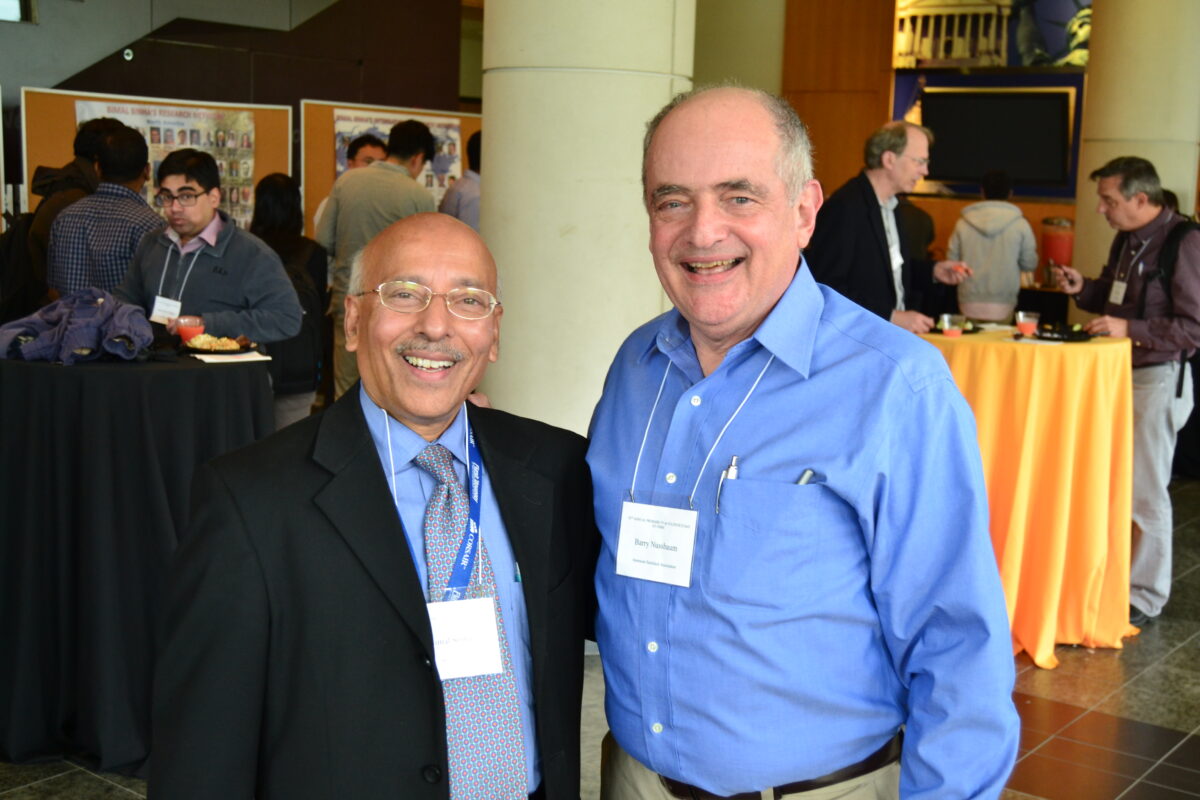
Bimal Sinha and Barry Nussbaum, former president of the American Statistical Association and current member of the AIC planning committee, at UMBC’s Probability and Statistics Day event in 2016. (Photo by Ricardo Moura)
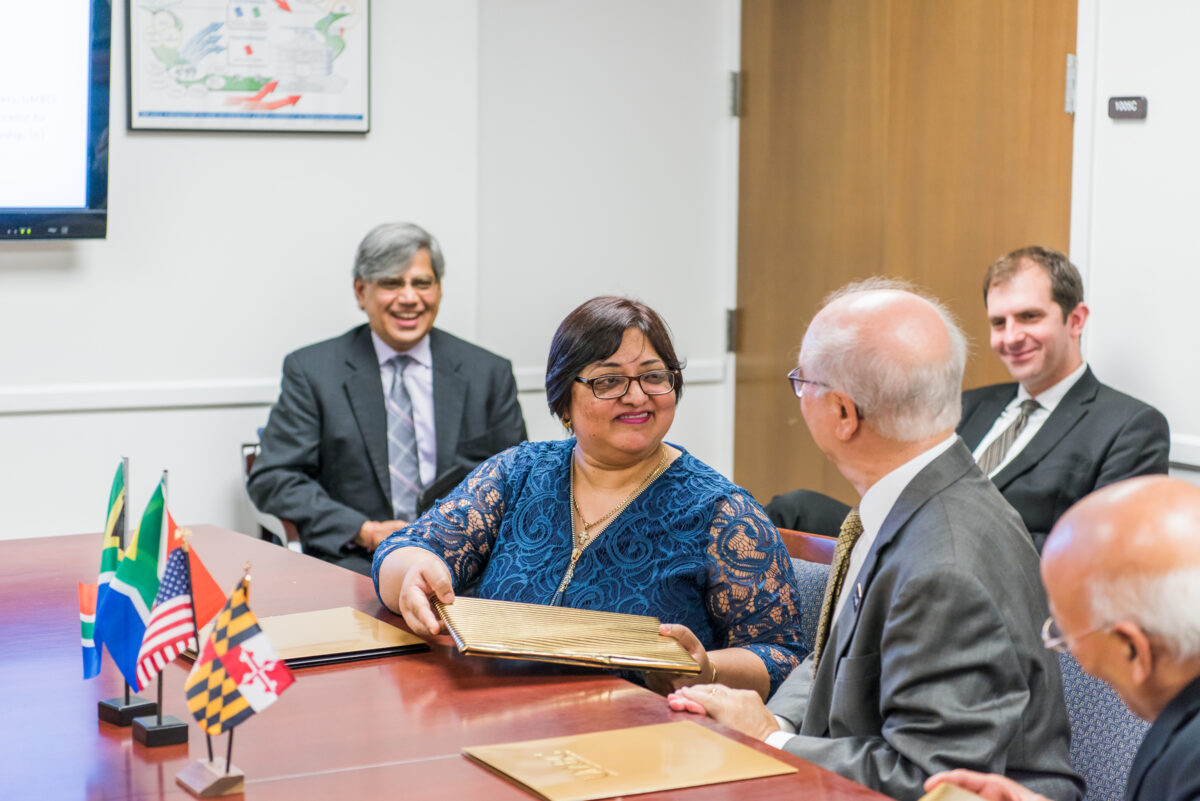
This April, Kifle signed an agreement with the American Statistical Association (ASA) on behalf of UMBC that pledges financial support from the ASA for the conference for at least the next two years, with the possibility for an extended partnership.
“Through the African International Conference on Statistics, we achieved a significant milestone in 2018 by signing the first UMBC memorandum of understanding with an African university, which supports training for African students on a short- and long-term basis,” Kifle says. “Now we stand as partners with the world’s largest statistical association, the American Statistical Association. This partnership with ASA lays the foundation for great optimism about a promising future for the AIC.”
Jesika Singh, University of Limpopo (center left), and Antonio Moreira, vice provost for academic affairs at UMBC (center right), sign the agreement between UMBC and the University of Limpopo in 2018.
The theme of the 2024 AIC is “Empowering Innovation: Advanced Statistics and Data Science for Sustainable Development in Africa.” The theme speaks to the power of statistics to support progress in areas like agriculture, economic development, and environmental conservation that are relevant to people all over the world.
“ASA is delighted to partner with UMBC on the African International Conference on Statistics,” shares Ronald Wasserstein, executive director of ASA. “The AIC has established itself as an important contributor to advancing statistical science in Africa. We hope ASA’s support will provide the opportunity for the creative and enthusiastic minds at UMBC to take the conference to still higher levels.”
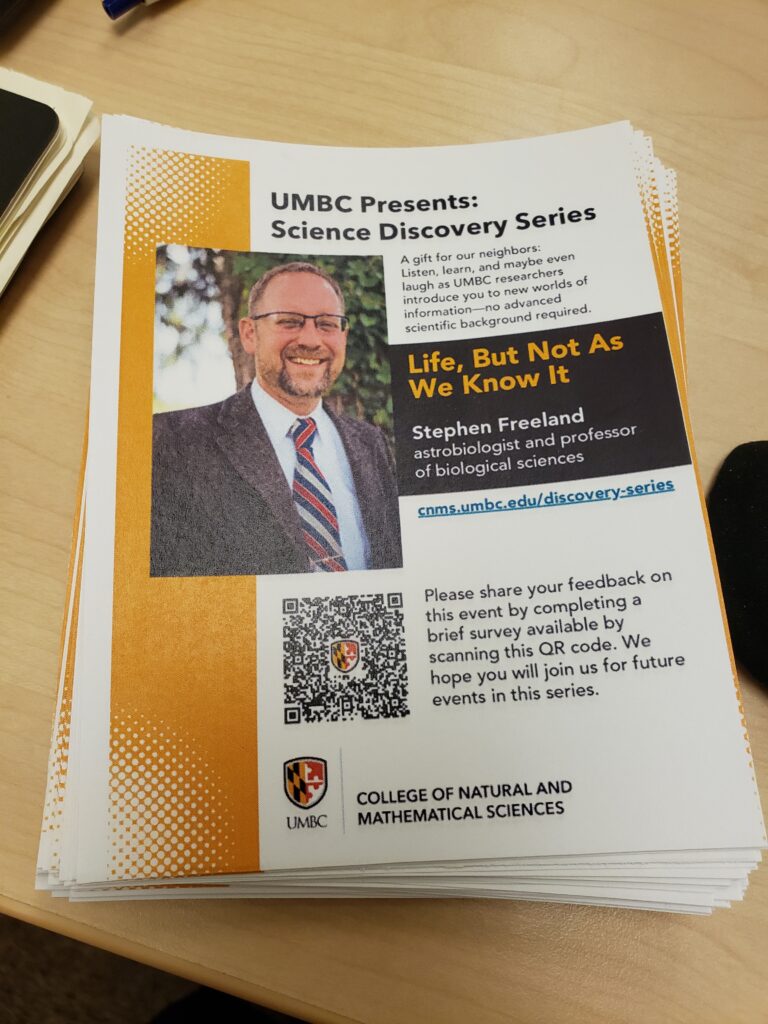
The College of Natural and Mathematical Sciences (CNMS) hosted its first CNMS Science Discovery Series event on March 27. In this public series, CNMS faculty members present talks on a variety of scientific topics. The goal of the series is to give back to the community by offering an opportunity for non-experts to learn about the research happening in their backyards.
“I grew up with the Apollo moon landings and Carl Sagan’s Cosmos. They inspired me and countless others to dream of being a scientist, to ask questions, to explore the unknown and discover new knowledge,” shares CNMS Dean William R. LaCourse. “As a public university, I believe it is part of our mission to share our knowledge and passion for science with our community to inspire others to dream of a better and brighter future.”
More than 80 attendees came out to the Fine Arts Recital Hall on a rainy night to learn about “Life, But Not As We Know It” from the inaugural speaker, Stephen Freeland, professor of biological sciences. Freeland drew in the audience as he discussed how the 20 amino acids we call our “amino acid alphabet” here on Earth evolved. He also explained how his current research could help discover alternative amino acid alphabets that might exist elsewhere in the universe.
Audience members included families who had heard about the event through Catonsville Middle School, Mt. St. Joseph High School, and other local school and community organizations, as well as members of the UMBC community, including faculty, staff, and members of the UMBC Astronomy Club.
In the event evaluation form, one middle school teacher commented, “I loved the content and learned new things I hope to bring to my classroom.” Another attendee shared that the event “grew my curiosity. I plan to read more about amino acids and DNA.” Yet another said, “Great job taking such complex concepts and making them accessible.” Attendees also reported appreciating having access to CNMS faculty ambassadors during the reception, who were happy to answer their questions on a range of topics.
The college is already starting to plan the next CNMS Science Discovery Series event for fall 2024, incorporating feedback from the first attendees. The topic will be completely different, but the goal will be the same: connecting with the community by offering a free gift of knowledge to anyone interested in learning something new.