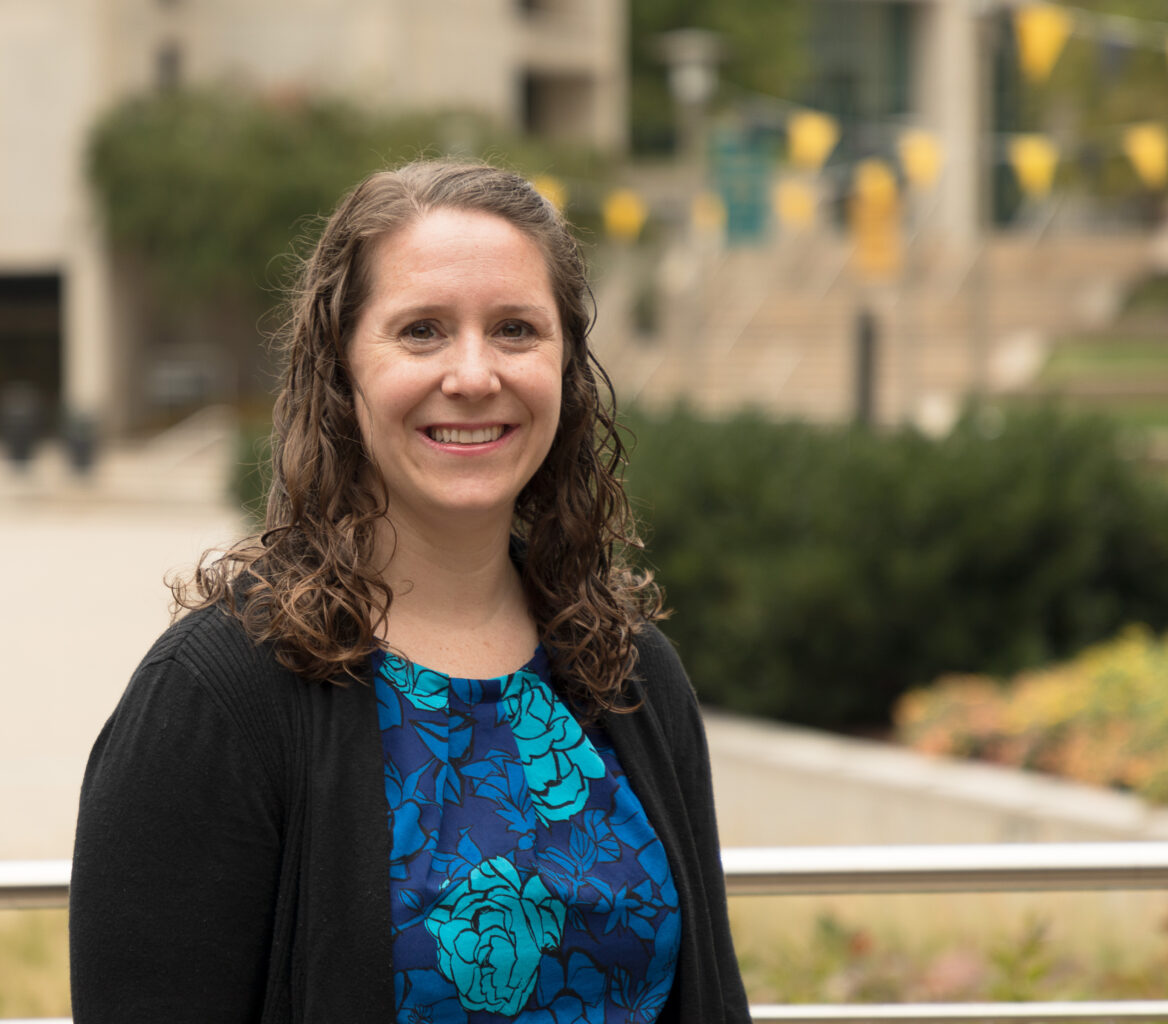

Courtney Cook, an instructor of gender, women’s, and sexuality studies, explains how Steinem’s activism connects to Black girlhood studies, exploring feminism’s evolution and hip-hop’s influence. Prospective students who want to explore feminism, Black girlhood, and hip-hop culture can study with Cook, who has taught Gender, Race, and Media; Sexuality Studies; and Black Girlhood at UMBC for over a decade.
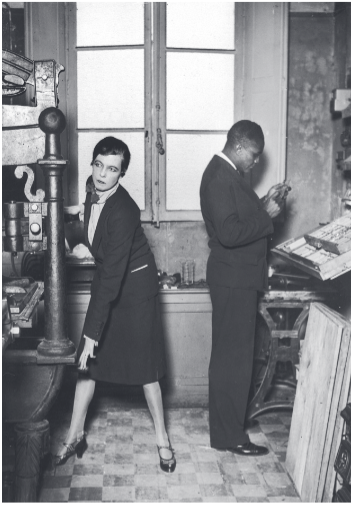
Famed feminist Gloria Steinem passed away in September. She was part of the second-wave feminist movement, which challenged inequalities around sexuality, family, domesticity, the workplace, and reproductive rights in the 1960s – 80s. Cook remembers Steinem challenging racism within the feminist movement. “What was great about Gloria Steinem was that, while she was a part of second-wave feminism, she wasn’t closed to other voices, especially Black feminists like Dorothy Pitman Hughes, an iconic civil rights leader,” says Cook. Steinem and Pitman Hughes co-founded Ms. magazine, the first national feminist magazine of the United States.
Cook also notes how Steinem supported the 1972 presidential campaign of Shirley Chisholm, the first Black woman elected to the U.S. Congress, and co-founded the National Women’s Political Caucus with her; hired renowned author Alice Walker as an editor at Ms. magazine from 1975 to 1986; and spoke around the country with scholar bell hooks about the intersections of race, gender, and class beginning in the ’90s.
“We have the emergence of Black feminism because of the work sparked by women like Gloria Steinem,” says Cook, discussing how feminism has evolved since Steinem’s time and how she teaches recent developments to students.
“I tell my students that there isn’t one definition of feminism. There are feminism(s). I put the ‘s’ in parentheses to help students understand that they don’t have to adhere to just one school of feminism. They can pick and choose because they all have the same foundation—equality.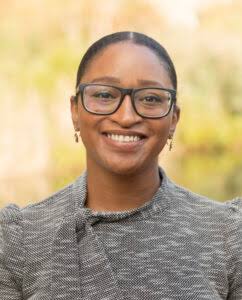
Q: How would you explain feminism and Black feminism to students?
A: For me, defining feminism now is about including the needs of marginalized people, but feminism is a multi-pronged, multi-angled endeavor for marginalized people. Since its inception, there has always been a debate over what defines feminism and feminists. Each wave of feminism expanded these definitions to include Black feminism, third world feminism, conservative feminism, religious feminism, etc. There are so many different feminisms. I tell my students that there isn’t one definition of feminism. There are feminism(s). I put the s in parentheses to help students understand that they don’t have to adhere to just one school of feminism. They can pick and choose because they all have the same foundation—equality.
Many people still get feminism confused with misandry, which is man-hate, and that is not what feminism is. Most students have never heard of the word because they’ve gotten so used to saying that feminists are man-haters. Then men feel like they can’t be feminists. Yes, you can, because it has nothing to do with hating men. There are many male feminists. President Barack Obama calls himself a feminist.
Q: What is ratchet feminism?
A: Black feminist scholars who were born in the 1980s—I was born in 1986—realized, around the time they started doing Black feminist work, that they could not do this work without talking about how Black people created hip-hop and the influence hip-hop had on arts and culture of the ’80s, ’90s, and early 2000s.
The term ratchet originated as a ’90s hip-hop slang and, over time, morphed into negative connotations that describe Black women and girls in hip-hop as ghetto, hood, loud, and not respectable. The message is: don’t talk Ebonics, ratchet phrases, or ratchet mannerisms. Black girls, Black women, and Black people have been taught that hip-hop culture or ratchet culture is lowbrow. There is a policing of the body in which iconic hip-hop styles—shiny acrylic long nails, baggy clothes, large gold bamboo earrings, locs and braids—are negatively labeled as outside of the middle-class cultural influences.
Black feminist scholars reclaimed the word and created ratchet feminism. Instead of labeling the influence hip hop has on women and girls as ghetto, hood, or unimportant, ratchet feminism embraces and celebrates the influence of hip hop culture on Black women and Black girls’ sense of self. Black female hip-hop artists’ messages were about unity, Black love, loving oneself as a Black person, loving one’s community, and being an empowered woman. We cannot talk to Black girls now without acknowledging the influence of Black culture.
Q: How can feminism continue to expand to support Black girls leading their own feminist wave?
A: Black girls are worthy of girlhood. As a childhood studies scholar, I talk a lot about what childhood means, and what childhood, adolescence, and girlhood are supposed to be. But Black girls are not told from the beginning that they deserve to exist in these spaces. Black girls are often adultified, perceived as older and more experienced than they are, and expected to live as miniature adults. Childhood studies recognizes adolescence as a distinct stage of life, yet Black girls are often advised on their future without receiving the guidance they need to navigate the circumstances they face in the present. We need to give them the safety and the space to explore childhood without reprimands, punishments, and policing of their bodies, language, and interests.
I want Black girls to know that there are resources, scholars, and activists who recognize their worthiness to simply be girls. They deserve to enjoy their childhood and adolescence and to experience these stages of life safely. Black girls are worthy of life, too. If we nurture Black girls, we’d see beautiful results in adulthood. The most feminist revolutionary act for Black girls is having the freedom to be themselves and live freely.
Apply to UMBC to study gender, women’s, and sexuality studies.